
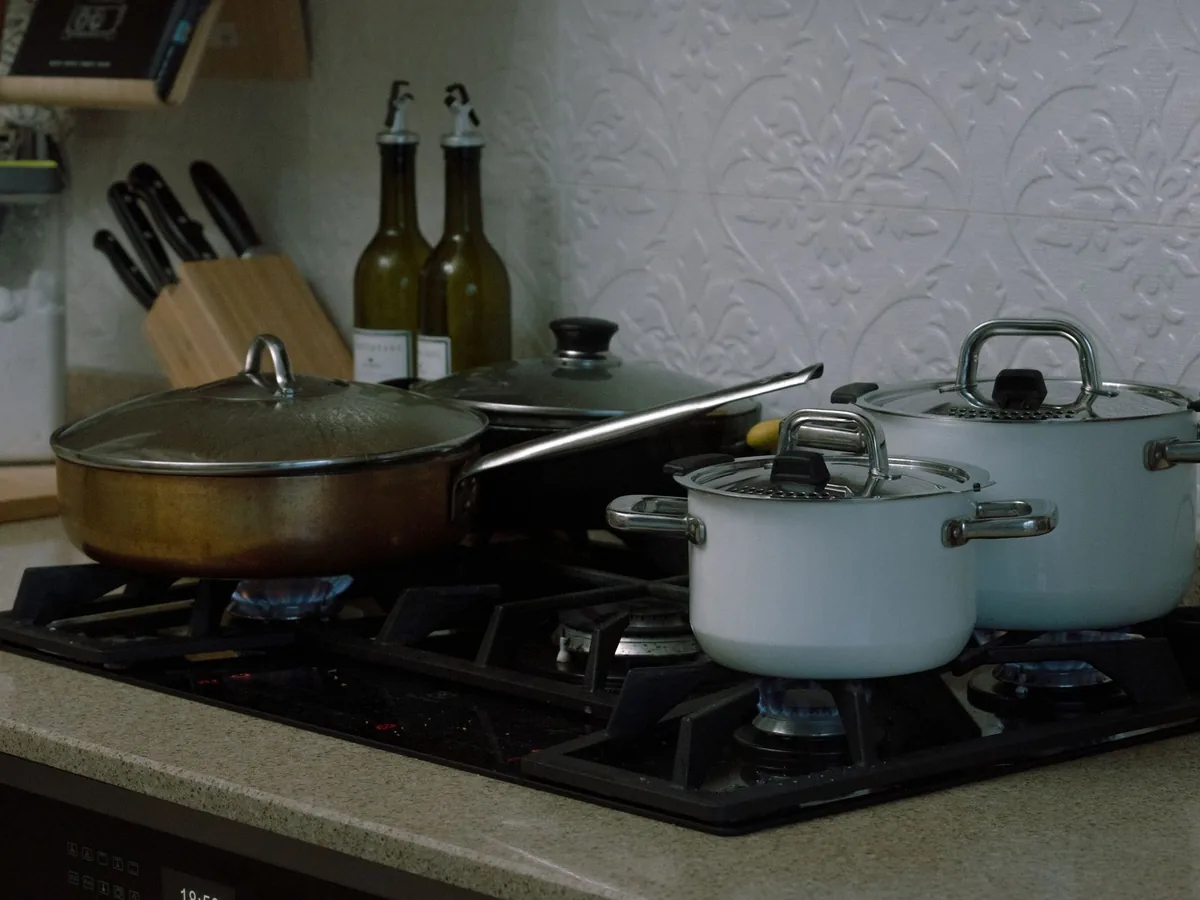
Few kitchen debates run hotter than this one. Stainless steel loyalists swear by the deep brown crust on a seared steak; nonstick devotees point to the fried egg that slides out with zero scrubbing. Both camps are right — because these two materials do fundamentally different jobs.
This guide compares stainless steel and nonstick cookware honestly: how each one cooks, where each one falls short, what to look for when buying, and how to care for both. By the end, you’ll know which belongs in your kitchen — and why the real answer for most cooks is a mix of the two.
What Each Material Actually Is
Stainless steel cookware is made from a food-safe steel alloy. Quality pieces are usually “clad” or “tri-ply”: layers of stainless steel sandwiching a core of aluminum (sometimes copper), which spreads heat quickly and evenly. The cooking surface itself is bare metal — nothing to wear off, nothing to baby.
Nonstick cookware is typically an aluminum pan coated with a slick synthetic layer — most commonly PTFE-based coatings, with ceramic-based coatings as another popular option. The coating is what makes food release effortlessly, and it’s also the part with the shortest lifespan and the most usage rules.
Head-to-Head Comparison
| Stainless Steel | Nonstick | |
|---|---|---|
| Searing and browning | Excellent — high heat, deep crust, great fond | Poor — coatings can’t take the high heat searing needs |
| Ease of cleanup | Needs soaking/scrubbing for stuck food | Effortless — food slides off |
| Heat tolerance | Very high; usually oven-safe | Limited — avoid high heat and preheating empty |
| Utensils | Any, including metal | Wood, silicone, or plastic only |
| Durability | Decades with basic care | Coating wears out in a few years of regular use |
| Dishwasher | Generally yes (hand washing keeps it prettier) | Hand wash recommended to protect coating |
| Best for | Searing meat, deglazing sauces, boiling, sautéing | Eggs, pancakes, delicate fish, low-fat cooking |
| Learning curve | Needs preheating and enough fat/oil | Forgiving from day one |
Where Stainless Steel Wins
Searing. If you want a deeply browned crust on chicken thighs, steak, or scallops, stainless steel is the tool. It handles the high heat that browning requires, and the browned bits left behind (the fond) dissolve into pan sauces with incredible flavor. Nonstick simply can’t get hot enough to do this job well.
Durability. A good stainless pan can outlive you. There are no coatings to scratch or degrade — metal utensils, scouring pads, and high heat are all fine. It may discolor or develop rainbow-like heat tints over time, but that doesn’t affect performance and can be polished away.
Versatility. From stovetop to a hot oven, stainless goes anywhere. You can start a frittata on the burner and finish it under the broiler, or make one-pot chicken and rice that simmers and then crisps in the oven — all in the same pan.
Sauce-making. Deglazing — pouring wine, stock, or water into a hot pan to lift the fond — is the foundation of great pan sauces. Stainless steel’s bare surface builds fond beautifully; nonstick’s slick surface barely builds any.
Where Nonstick Wins
Delicate foods. Eggs, crepes, pancakes, and delicate fish fillets release cleanly from nonstick with little or no added fat. A tofu stir-fry with its fragile cubes is far less stressful in a nonstick wok or skillet, especially when you’re still building confidence.
Easy cleanup. This is the headline benefit and it’s real: most meals rinse clean with a soft sponge. For weeknight cooking when you want dinner without a sink full of soaking pans, nonstick earns its keep.
Low-fat cooking. Because food doesn’t stick, you can cook with a fraction of the oil — genuinely useful if you’re cutting back on added fats.
Forgiveness. Nonstick doesn’t demand preheating technique or temperature judgment. Beginners get good results immediately, which is why it’s often the first pan new cooks actually enjoy using.
The Honest Downsides
Stainless steel’s learning curve. Food sticks to stainless if the pan isn’t properly preheated or if you move it too soon. The fix is technique: heat the pan first, then add oil, then add food — and let proteins release naturally (they’ll unstick when a crust forms). It takes a few tries to internalize.
Nonstick’s lifespan. The coating is a wear item. Even with perfect care — no metal utensils, no high heat, hand washing — a nonstick pan used regularly will lose its slickness within a few years and need replacing. Scratches, flaking, or a surface where eggs start sticking are signs it’s done.
Nonstick’s heat limits. High heat degrades nonstick coatings over time and can damage them quickly if you overheat an empty pan. Never preheat nonstick empty on high, never use it under a broiler unless the manufacturer says it’s safe, and let it cool before washing to avoid warping.
What to Look for When Buying
Stainless steel:
– Look for “tri-ply” or “clad” construction — a conductive aluminum or copper core bonded between steel layers. This is what prevents hot spots.
– Heft matters: a pan that feels substantial holds heat more steadily.
– Comfortable, stay-cool handles and a well-fitting lid add real everyday value.
– Check oven-safe temperature ratings if you plan to finish dishes in the oven.
Nonstick:
– A heavier base resists warping and heats more evenly.
– Check the coating type and the manufacturer’s heat guidance; ceramic coatings are PTFE-free but tend to lose nonstick performance sooner.
– Since you’ll replace it eventually, there’s less reason to overspend — a solid mid-range pan is the sensible buy.
– Look for a flat, stable base that sits evenly on your burner.
Care and Maintenance
Stainless steel care:
– Preheat the pan before adding oil to reduce sticking.
– Deglaze stuck bits with water, wine, or stock while the pan is still warm — most messes lift right off.
– For discoloration or rainbow tints, a paste of baking soda and water or a dedicated stainless steel cleaner restores the shine.
– Avoid plunging a screaming-hot pan into cold water; extreme thermal shock can warp even good pans over time.
– Bar Keeper’s Friend-type cleansers (oxalic-acid based) are the classic fix for stubborn stains.
Nonstick care:
– Use only wood, silicone, or heat-safe plastic utensils — metal scratches the coating.
– Hand wash with a soft sponge; harsh scouring pads and the dishwasher shorten coating life.
– Avoid aerosol cooking sprays, which can leave a stubborn residue that bakes onto the coating.
– Cook on low to medium heat, and never heat the pan empty.
– Replace the pan when the coating is visibly scratched, peeling, or food starts sticking — a damaged coating doesn’t cook well and should be retired.
Common Mistakes
- Trying to sear in nonstick. Cranking a nonstick pan to high heat for a hard sear gives you gray meat and a damaged coating. Use stainless for searing.
- Cooking eggs in stainless as a beginner. You can do it with technique, but nonstick makes breakfast dramatically easier while you’re learning.
- Using metal utensils on nonstick. One careless scrape with a metal spatula can start the coating’s decline.
- Overheating nonstick empty. Always have oil or food in the pan before it gets hot.
- Buying a full nonstick set. You’ll replace every piece within a few years. Buy one or two nonstick pieces (a skillet and maybe a small saucepan) and invest in stainless for the rest.
Frequently Asked Questions
Do I need both stainless steel and nonstick?
For most home cooks, yes — one of each covers nearly everything. A stainless skillet handles searing, sautéing, and sauces; a nonstick skillet handles eggs, pancakes, and delicate foods. That two-pan combo outperforms a full matching set of either material.
Is nonstick cookware safe?
Modern nonstick coatings are considered safe for normal cooking when used as directed — meaning low to medium heat, no overheating empty pans, and replacing damaged pans. If a pan’s coating is scratched or flaking, retire it rather than continuing to cook on it.
Why does food stick to my stainless steel pan?
Almost always one of three things: the pan wasn’t fully preheated before oil went in, there wasn’t enough fat, or the food was moved before it released naturally. Heat the pan, add oil, wait for it to shimmer, then add food — and give proteins a minute to form a crust before trying to flip them.
Can nonstick pans go in the oven?
Some can, within the temperature limits set by the manufacturer — but many handles and coatings aren’t rated for high oven heat. Check your specific pan’s rating; when in doubt, use stainless for oven work.
How long does nonstick last?
With careful use — hand washing, non-metal utensils, moderate heat — a few years of regular cooking is typical. Heavy daily use shortens that. When food starts sticking despite proper technique, the coating is worn and it’s time for a replacement.
Which is better for induction cooktops?
Both can work, but the pan needs a magnetic base. Most stainless steel is induction-compatible; many nonstick pans are too (check for an induction-ready base). Stainless’s heft and flat base tend to perform especially well on induction.
The Bottom Line
Think of it as a division of labor: stainless steel for heat, browning, and sauces; nonstick for delicate foods and easy mornings. Start with a quality stainless steel skillet and add a nonstick skillet for eggs and fish, and you’ll have the two most useful pans in any kitchen. Master the preheat-and-release rhythm on stainless for dishes like one-pot chicken and rice, keep the nonstick for gentle jobs like a tofu stir-fry, and you’ll stop fighting your pans and start enjoying them.