
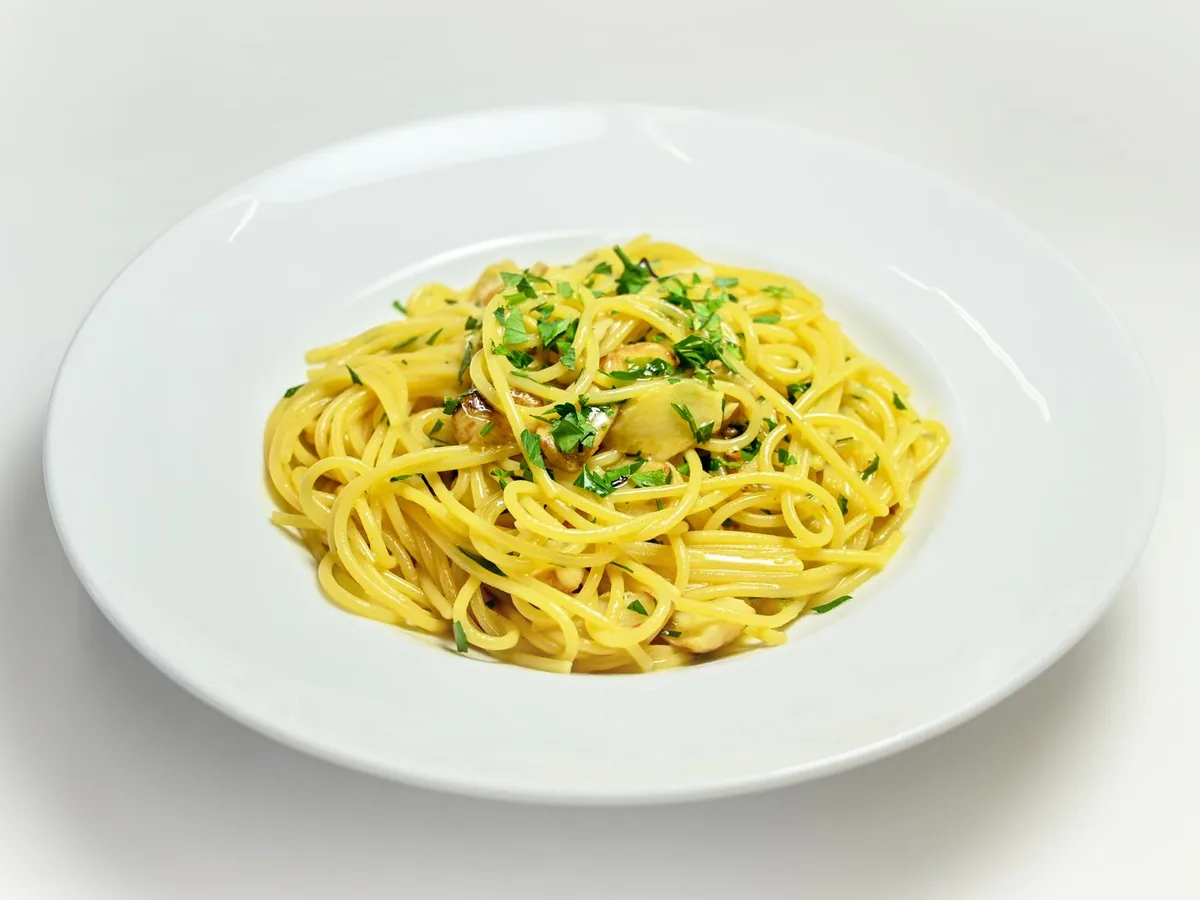
Some nights call for something warm, buttery, and on the table in twenty minutes. This quick garlic butter pasta delivers exactly that: tender spaghetti tossed in a silky sauce of browned garlic, melted butter, and starchy pasta water, finished with salty Parmesan and fresh parsley. It is the kind of dinner that tastes far more luxurious than its ingredient list suggests.
There is no cream, no complicated technique, and no special equipment. Just a pot, a pan, and a handful of staples you probably already have. Once you learn the trick of the pasta water — the starchy liquid that turns butter into a glossy sauce — this becomes one of those recipes you can make on autopilot.
Prep: 5 minutes | Cook: 15 minutes | Total: 20 minutes | Servings: 4
Quick Garlic Butter Pasta
Tender spaghetti in a silky garlic-butter sauce with Parmesan, lemon, and parsley — a 20-minute weeknight dinner from pantry staples.
Ingredients
- 12 oz spaghetti
- 6 tablespoons unsalted butter
- 5 large garlic cloves, thinly sliced
- 1/2 teaspoon red pepper flakes
- 3/4 cup freshly grated Parmesan cheese
- 1 tablespoon lemon juice
- 1/2 lemon, zested
- 1/4 cup fresh parsley, chopped
- 1 1/2 teaspoons kosher salt, plus more for pasta water
- 1/2 teaspoon black pepper
Instructions
- Boil the pasta: Cook the spaghetti in generously salted boiling water until just al dente. Reserve 1 1/2 cups of pasta water before draining.
- Bloom the garlic: Meanwhile, melt the butter in a large skillet over medium heat. Add the sliced garlic and red pepper flakes; cook 2–3 minutes until pale golden, not brown.
- Build the sauce: Reduce heat to low and add 1 cup of the reserved pasta water, swirling to combine with the butter.
- Toss the pasta: Add the drained pasta and lemon juice. Toss vigorously 1–2 minutes, adding splashes of pasta water, until the sauce turns glossy and coats the noodles.
- Finish: Off the heat, add the Parmesan, lemon zest, parsley, salt, and pepper. Toss until the cheese melts into a smooth sauce.
- Serve: Twirl into bowls, top with extra Parmesan and parsley, and serve immediately.
Recipe Notes
Best eaten fresh; leftovers keep 3 days refrigerated and reheat with a splash of water. Not suitable for freezing. Scales easily — double all sauce ingredients for 8 servings.
Why this recipe works
The entire sauce comes together in the time the pasta boils, which is the real genius of this dish. Slicing the garlic thinly instead of mincing it lets the pieces turn golden and crisp without burning, giving you little toasty nuggets throughout. The butter melts into the reserved pasta water, and the starch in that water emulsifies everything into a smooth, clinging sauce instead of a greasy slick — no cream required.
A squeeze of lemon and a handful of parsley at the end cut through the richness so the dish stays bright rather than heavy. Parmesan adds umami depth that makes simple ingredients taste complete.
Ingredients
- 12 oz spaghetti (or linguine) — long noodles give the sauce maximum surface to cling to; use bronze-die pasta if you can find it, since its rougher texture grabs sauce better.
- 6 tablespoons unsalted butter — the soul of the sauce; unsalted lets you control the seasoning.
- 5 large garlic cloves, thinly sliced — sliced garlic crisps into golden chips; minced garlic burns faster and turns bitter.
- 1/2 teaspoon red pepper flakes — a gentle background heat; add more if you like it spicy.
- 3/4 cup freshly grated Parmesan cheese — pre-grated cheese contains anti-caking agents that make sauces grainy, so grate your own.
- 1 tablespoon lemon juice, plus zest of 1/2 lemon — brightness that balances the butter.
- 1/4 cup fresh parsley, chopped — color, freshness, and a clean herbal note.
- 1 1/2 teaspoons kosher salt, plus more for the pasta water — pasta water should taste like the sea; it seasons the noodles from within.
- 1/2 teaspoon black pepper — freshly cracked if possible.
Substitutions
- Dairy-free: Use a good vegan butter and a vegan Parmesan-style cheese; the technique works the same.
- Gluten-free: Use your favorite gluten-free spaghetti and reserve extra pasta water — gluten-free starches emulsify even better.
- Different pasta shapes: Penne, fettuccine, or rigatoni all work; adjust the boiling time to the package directions.
- Add protein: Toss in cooked shrimp, sliced grilled chicken, or a can of drained white beans to make it a fuller meal.
- Add vegetables: Wilt in a few handfuls of baby spinach, or add blanched broccoli florets or sun-dried tomatoes.
- No lemon? A splash of white wine vinegar or extra parsley keeps the brightness.
Equipment
A large pot for boiling pasta and a large skillet (12-inch) for the sauce — that’s it. A stainless steel or nonstick skillet both work here, though stainless gives you better browning on the garlic. You’ll also need tongs (the best tool for tossing pasta), a colander, a microplane or fine grater for the Parmesan, and a sharp knife for slicing the garlic — our guide to choosing the right chef’s knife covers what makes slicing garlic effortless.
Instructions
- Boil the pasta. Bring a large pot of generously salted water to a rolling boil. Cook the spaghetti according to package directions until just al dente — 1 minute less than the package says, since it will finish in the sauce. Before draining, scoop out 1 1/2 cups of the starchy pasta water. Drain the pasta.
- Bloom the garlic. While the pasta cooks, melt the butter in a large skillet over medium heat. Add the sliced garlic and red pepper flakes. Cook, stirring often, for 2–3 minutes until the garlic is pale golden. Do not let it turn dark brown — it goes from perfect to bitter in seconds.
- Build the sauce. Reduce the heat to low. Add 1 cup of the reserved pasta water to the skillet and swirl to combine with the butter. It will look thin at first; that’s normal.
- Toss the pasta. Add the drained pasta to the skillet along with the lemon juice. Toss vigorously with tongs for 1–2 minutes, adding splashes of the remaining pasta water as needed, until the sauce turns glossy and coats every strand.
- Finish. Remove from the heat. Add the Parmesan, lemon zest, parsley, salt, and pepper. Toss again until the cheese melts into the sauce. If it looks dry, add a splash more pasta water; if too loose, toss for another 30 seconds.
- Serve. Twirl into bowls and top with extra Parmesan, parsley, and a pinch of red pepper flakes. Serve immediately — this dish waits for no one.
Recipe scaling notes
Pasta is one of the easiest things to scale, but watch the sauce ratio: doubling the pasta means doubling the butter, garlic, and cheese — not the water in the pot (just use a bigger pot so the noodles have room). For precise amounts at any serving size, run it through our Recipe Scaler and read How to Scale Recipes Without Ruining Them for tips on keeping the sauce silky at larger volumes.
Storage and reheating
Store leftovers in an airtight container in the refrigerator for up to 3 days. The sauce will absorb into the pasta overnight, so reheat gently in a skillet over low heat with a splash of water or milk, tossing until the sauce loosens and turns glossy again. The microwave works in a pinch — heat in 30-second bursts, stirring between each.
Freezing
Freezing is not recommended for this one. Butter-based sauces tend to separate and the pasta texture goes soft and grainy after thawing. This recipe is fast enough to make fresh whenever the craving hits — and if you want a pasta dish that freezes well, our Creamy Tomato Pasta from Scratch holds up better.
Common mistakes and troubleshooting
- Sauce is greasy instead of silky: Not enough pasta water, or the cheese went in while the pan was too hot. Add more starchy water and toss off the heat.
- Garlic tastes bitter: It browned too far. Start over with fresh garlic — bitter garlic can’t be fixed, and it flavors the whole dish.
- Sauce is clumpy: Pre-grated Parmesan or cheese added to a ripping-hot pan. Always grate fresh and toss the cheese in off the heat.
- Pasta is bland: The boiling water wasn’t salted enough. It should taste noticeably salty — like seawater.
- Dry noodles: You skipped the extra pasta water. Keep the full 1 1/2 cups reserved; you can always add more, but you can’t get it back once it’s down the drain.
Frequently asked questions
Can I use olive oil instead of butter? You can, but it becomes a different dish — garlic olive oil pasta is lovely, just lighter. For the classic rich flavor here, butter is the point. A 50/50 mix is a nice compromise.
Why do you slice the garlic instead of mincing it? Slices cook more evenly and turn into crisp, golden chips that stay sweet. Minced garlic has more surface area, browns faster, and is far more likely to burn and turn bitter.
What is the pasta water actually doing? The starch released by the cooking pasta acts as an emulsifier, binding the butter into a smooth sauce that clings to the noodles instead of pooling at the bottom of the bowl.
Can I add shrimp or chicken? Yes — sauté shrimp or thin chicken strips in the skillet first, set aside, and add them back when you toss the pasta. They turn this into a complete one-pan dinner alongside our Easy One-Pot Chicken and Rice in your weekly rotation.
How do I keep the Parmesan from clumping? Take the pan off the heat, add the cheese in two additions, and toss constantly. Fresh-grated cheese melts far more smoothly than the pre-grated kind.
Is this recipe vegetarian? Yes — just confirm your Parmesan is made without animal rennet if that matters to you, or use a vegetarian hard cheese.
Nutrition
One serving (about 1 1/2 cups) contains an estimated 540 calories, 17g protein, 72g carbohydrates, and 21g fat. These are estimates only, based on standard ingredient data — actual values vary with brands, portion sizes, and how much cheese you add at the table. Treat this as a general guide, not medical advice.
Simple ingredients, restaurant flavor
Quick garlic butter pasta is proof that dinner doesn’t need a long ingredient list to be memorable. Master the pasta-water trick once and you’ll use it forever — in this dish, in Creamy Tomato Pasta, and in just about every noodle night from here on out.