
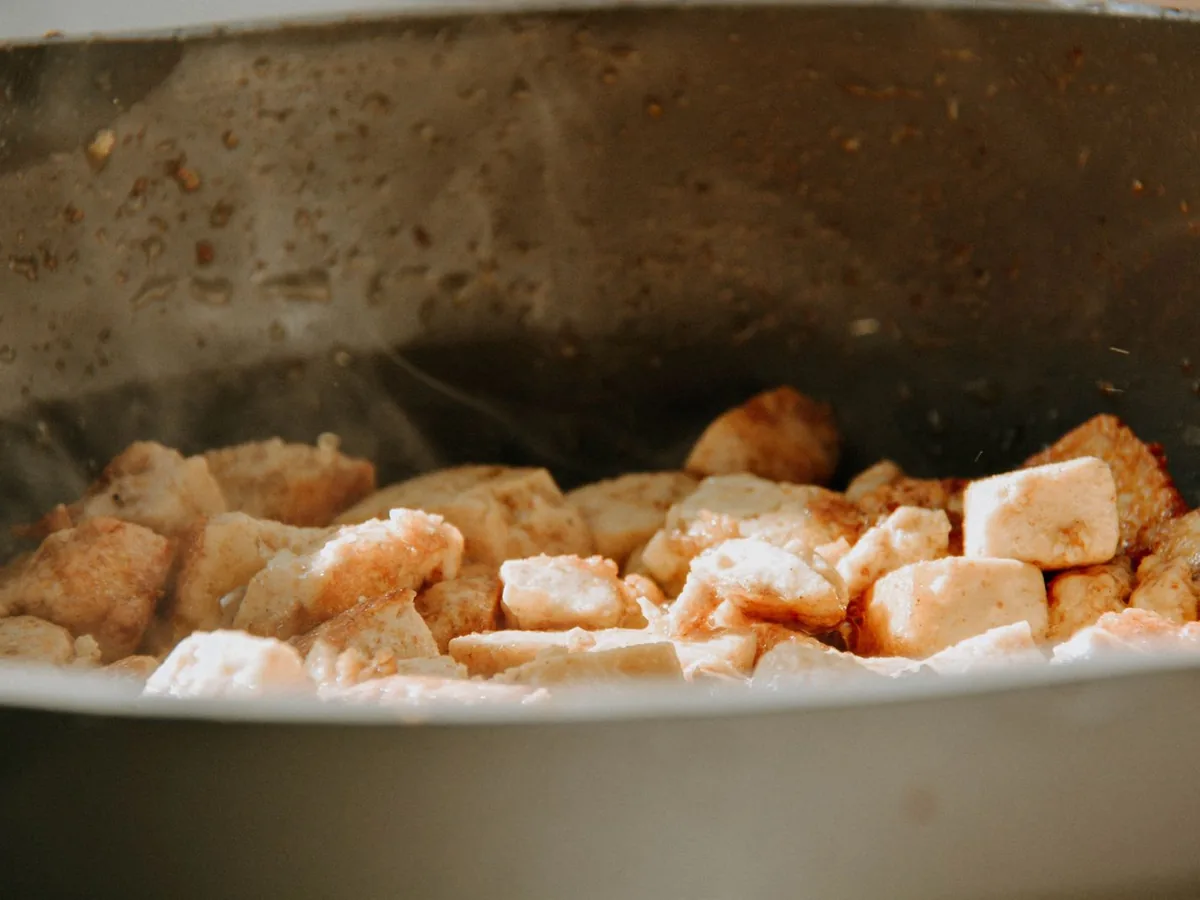
Some weeknight dinners feel like a compromise — fast but boring, or healthy but bland. This easy tofu stir-fry with vegetables is neither. You get crisp-edged golden tofu, vegetables that stay bright and snappy, and a savory garlic-ginger sauce that ties everything together, all in about 30 minutes from the moment you open the fridge.
Most tofu trouble comes down to moisture and heat: press the water out, cook it hot, and it turns crisp-edged and creamy inside, ready to soak up the sauce. The vegetables are flexible, so this is an excellent clean-out-the-crisper-drawer dinner.
Quick facts: Prep 15 minutes · Cook 15 minutes · Total 30 minutes · Servings 4
Easy Tofu Stir-Fry with Vegetables
Golden seared tofu and crisp, colorful vegetables tossed in a savory garlic-ginger sauce. A fast, healthy 30-minute weeknight dinner served over rice.
Ingredients
- 1 block (14-16 oz) extra-firm tofu, pressed and cut into 3/4-inch cubes
- 2 tablespoons cornstarch
- 3 tablespoons neutral oil, divided
- 1 red bell pepper, cut into 1-inch pieces
- 1 cup broccoli florets
- 1 medium carrot, thinly sliced on the diagonal
- 1 cup snap peas
- 3 cloves garlic, minced
- 1 tablespoon fresh ginger, grated
- 3 green onions, thinly sliced, divided
- 1 teaspoon sesame oil
- 1 tablespoon sesame seeds (optional)
- Cooked rice or noodles, for serving
- 3 tablespoons soy sauce or tamari
- 1 tablespoon rice vinegar
- 1 tablespoon maple syrup or honey
- 1 teaspoon cornstarch
Instructions
- Press the tofu: Wrap the drained tofu in a clean kitchen towel and press under a heavy skillet for 10-15 minutes. Cut into 3/4-inch cubes.
- Mix the sauce: Whisk together the soy sauce, rice vinegar, maple syrup, 1 teaspoon cornstarch, garlic, and ginger in a small bowl. Set near the stove.
- Coat the tofu: Toss the tofu cubes with 2 tablespoons cornstarch and a pinch of salt until lightly and evenly coated.
- Sear the tofu: Heat 2 tablespoons oil in a large skillet or wok over medium-high heat until shimmering. Cook the tofu in a single layer, turning every 2 minutes, until golden and crisp, 6-8 minutes. Transfer to a plate.
- Cook the hard vegetables: Add the remaining oil to the pan. Stir-fry the broccoli and carrots for 2-3 minutes until they begin to soften but stay bright.
- Add the quicker vegetables: Add the bell pepper and snap peas and stir-fry 2-3 minutes more until tender-crisp with vivid color.
- Glaze everything: Return the tofu to the pan. Re-whisk the sauce, pour it in, and toss 1-2 minutes until it thickens and coats everything in a glossy glaze.
- Finish and serve: Remove from the heat, drizzle with sesame oil, and toss with half the green onions. Serve over rice or noodles, topped with remaining green onions and sesame seeds.
Recipe Notes
Refrigerate leftovers up to 4 days; reheat in a hot skillet for best texture. Not ideal for freezing since the vegetables soften. Double the batch by searing the tofu in two rounds rather than crowding the pan; use the Recipe Scaler tool for exact scaled amounts.
Why This Recipe Works
Sear the tofu first so it develops a golden crust, cook the vegetables in the same pan (hardest first, most delicate last), then bring everything back together with the sauce for a quick glaze.
High heat works because it sears rather than steams: moisture evaporates on contact instead of pooling, giving you crisp tofu edges and snappy vegetables. A large skillet or wok gives everything room to breathe.
Ingredients
- 1 block (14–16 oz) extra-firm tofu — holds its shape through high-heat cooking; silken or soft tofu will fall apart, so save those for soups and smoothies.
- 2 tablespoons cornstarch — a light coating that crisps up in the pan and gives the tofu its golden crust.
- 3 tablespoons neutral oil, divided — such as avocado or canola; you need an oil with a high smoke point for proper searing.
- 1 red bell pepper, cut into 1-inch pieces — adds sweetness, color, and vitamin-rich crunch.
- 1 cup broccoli florets — small florets cook quickly and catch the sauce in their nooks.
- 1 medium carrot, thinly sliced on the diagonal — thin slices mean it cooks through in the same time as everything else.
- 1 cup snap peas — they stay crisp and sweet with just a couple of minutes of heat.
- 3 cloves garlic, minced — the backbone of the sauce’s aroma; it blooms in hot oil.
- 1 tablespoon fresh ginger, grated — warmth and lift that makes the whole dish taste fresh.
- 3 green onions, thinly sliced — half go in at the end for freshness, half as garnish.
- 1 teaspoon sesame oil — a finishing oil for nutty aroma; too delicate for the high-heat sear.
- 1 tablespoon sesame seeds — optional crunch and visual finish.
- Cooked rice or noodles, for serving — jasmine rice, brown rice, or rice noodles all work.
- For the sauce: 3 tablespoons soy sauce or tamari — savory depth; 1 tablespoon rice vinegar — bright acidity; 1 tablespoon maple syrup or honey — a touch of sweetness to balance the salt; 1 teaspoon cornstarch — thickens the sauce so it clings instead of pooling.
Substitutions
Tofu is the star, but the supporting cast is flexible. A few practical swaps:
- Tempeh in place of tofu — press less, crumble or cube it, and cook it the same way. Its nutty flavor stands up well to the sauce.
- No ginger? Use ½ teaspoon ground ginger in the sauce instead. Fresh is brighter, but ground keeps dinner moving.
- Tamari or coconut aminos in place of soy sauce — tamari keeps it gluten-free; coconut aminos are milder and slightly sweeter, so you may want a touch less maple syrup.
- Any stir-fry vegetables — zucchini, mushrooms, bok choy, asparagus, or a bag of frozen stir-fry vegetables all work. The rule stays the same: hardest vegetables first, delicate ones last.
- Sriracha or chili flakes stirred into the sauce if you want heat — start with a teaspoon and adjust.
Equipment You’ll Need
A large skillet or wok is the single most important piece of equipment here — ideally 12 inches or larger, so the tofu and vegetables have room to sear instead of steam. A nonstick or well-seasoned cast-iron skillet both work; if you use stainless steel, make sure it’s fully preheated before the oil goes in, or the tofu will stick (see Stainless Steel vs Nonstick for the full breakdown).
A sharp chef’s knife and sturdy cutting board keep cuts even so everything cooks at the same rate. You’ll also want a large bowl for the cornstarch toss, a small bowl for the sauce, and tongs or a spatula for turning the tofu.
Instructions
- Press the tofu. Drain the tofu and wrap the block in a clean kitchen towel or several layers of paper towels. Set a heavy skillet or a couple of cans on top and let it press for 10–15 minutes. This is the step that makes crisp tofu possible — less water in the block means better browning. Cut the pressed tofu into ¾-inch cubes.
- Mix the sauce. In a small bowl, whisk together the soy sauce, rice vinegar, maple syrup, 1 teaspoon cornstarch, garlic, and ginger. Set it aside near the stove — stir-frying moves fast once the heat is on.
- Coat the tofu. Toss the tofu cubes with 2 tablespoons cornstarch and a pinch of salt in a large bowl until lightly and evenly coated.
- Sear the tofu. Heat 2 tablespoons of the oil in a large skillet or wok over medium-high heat until it shimmers — the pan surface should be around 375°F (190°C). Add the tofu in a single layer and cook, turning every 2 minutes or so, until golden and crisp on most sides, 6–8 minutes total. Transfer to a plate.
- Cook the hard vegetables. Add the remaining tablespoon of oil to the same pan. Add the broccoli and carrots first and stir-fry for 2–3 minutes, tossing frequently, until they start to soften at the edges but are still bright.
- Add the quicker vegetables. Add the bell pepper and snap peas and stir-fry 2–3 minutes more, until tender-crisp. The vegetables should still have bite — you’re looking for vivid color and a slight sheen, not floppy softness.
- Glaze everything. Return the tofu to the pan. Give the sauce a quick re-whisk (the cornstarch settles), pour it in, and toss for 1–2 minutes until the sauce thickens, turns glossy, and coats everything evenly.
- Finish and serve. Remove from the heat, drizzle with the sesame oil, and toss in half the green onions. Serve over rice or noodles, topped with the remaining green onions and sesame seeds.
Recipe Scaling Notes
This recipe scales beautifully because stir-frying is forgiving — but pan size is the real limit. For a double batch, sear the tofu in two batches rather than crowding the pan; crowded tofu steams instead of crisping. Halving is easy: use half a block of tofu and simply reduce everything else proportionally.
For exact amounts at any serving size, plug this recipe into our Recipe Scaler tool — enter the servings you want and get every ingredient recalculated instantly. And if you’re scaling stir-fries often, the full guide on How to Scale Recipes Without Ruining Them covers the adjustments — heat, timing, and pan size — that raw math alone can’t give you.
Storage and Reheating
Store leftovers in an airtight container in the refrigerator for up to 4 days. Keep the rice separate if you can — it reheats better on its own and won’t turn mushy sitting in sauce.
Reheat in a skillet over medium heat with a teaspoon of oil, tossing 2–3 minutes — it re-crisps the tofu in a way the microwave can’t. The microwave works in a pinch (90 seconds at a time, stirring between), but the tofu will soften.
Freezing and Meal-Prep Notes
This stir-fry is a strong meal-prep candidate with one caveat: the vegetables. Cooked broccoli, snap peas, and bell peppers turn soft after freezing and thawing, so this is a fridge-prep recipe, not a freezer one.
For meal prep, cook a full batch on Sunday and portion it into four containers with rice — the flavors meld nicely overnight. Or do a “prep only” version: press and cube the tofu, whisk the sauce into a jar, and cut the vegetables, so weeknight cooking takes 15 minutes.
Common Mistakes and Troubleshooting
- Tofu falls apart in the pan. You probably used soft or silken tofu, or skipped the pressing. Extra-firm, well-pressed tofu holds together. If it crumbles anyway, cube it larger next time — bigger pieces are sturdier.
- Tofu sticks to the pan. The pan wasn’t hot enough before the oil went in, or you moved the tofu too soon. Let the oil shimmer, add the tofu, and leave it alone for a full 2 minutes before turning.
- Vegetables come out soggy. The pan was overcrowded, or the heat was too low. Cook in a bigger pan or in batches, and keep the heat at medium-high so moisture evaporates instead of pooling.
- Sauce is too thin. The cornstarch slurry settled before you poured it in — always re-whisk. If it’s already thin, simmer 1–2 minutes longer; the cornstarch needs sustained heat to thicken.
Frequently Asked Questions
Do I have to press the tofu? For this recipe, yes — it’s the difference between crisp and soggy. Pressing for even 10 minutes removes the water that would otherwise steam the tofu in the pan. If you’re in a hurry, extra-firm tofu straight from a good squeeze in paper towels still works, just with slightly less browning.
Can I use frozen vegetables? You can, with a trade-off. Thaw them first and pat them very dry, then add them after the fresh vegetables have had a head start. Frozen vegetables release extra water, so keep the heat high and give them space in the pan.
Is this recipe gluten-free? As written with tamari instead of soy sauce, yes. Cornstarch is naturally gluten-free, and all the other ingredients are too. Just double-check your tamari label, since some soy sauces contain wheat.
What protein can I use instead of tofu? Chicken breast strips, shrimp, or thinly sliced beef all work with the same technique — sear the protein first, set it aside, cook the vegetables, then bring it all together in the sauce. Adjust the sear time so the protein is just cooked through.
Why is my tofu not crispy even though I pressed it? The most common culprit is heat. The pan needs to be genuinely hot — oil shimmering — before the tofu goes in, and the tofu needs space. Crowding drops the pan temperature and steams everything. Two batches in a hot pan beat one batch in a lukewarm one every time.
Nutrition
Per serving (about 1½ cups stir-fry, not including rice): approximately 320 calories, 16 g protein, 18 g carbohydrates, 22 g fat, 5 g fiber, 640 mg sodium. Serving this over ¾ cup of cooked rice adds roughly 150 calories.
Nutrition values are estimates from standard ingredient databases and vary with brands, portions, and substitutions; not medical advice.
Fast enough for a Tuesday, good enough that nobody asks for takeout — once you nail the press-sear-glaze rhythm, swap in whatever vegetables the week throws at you.