
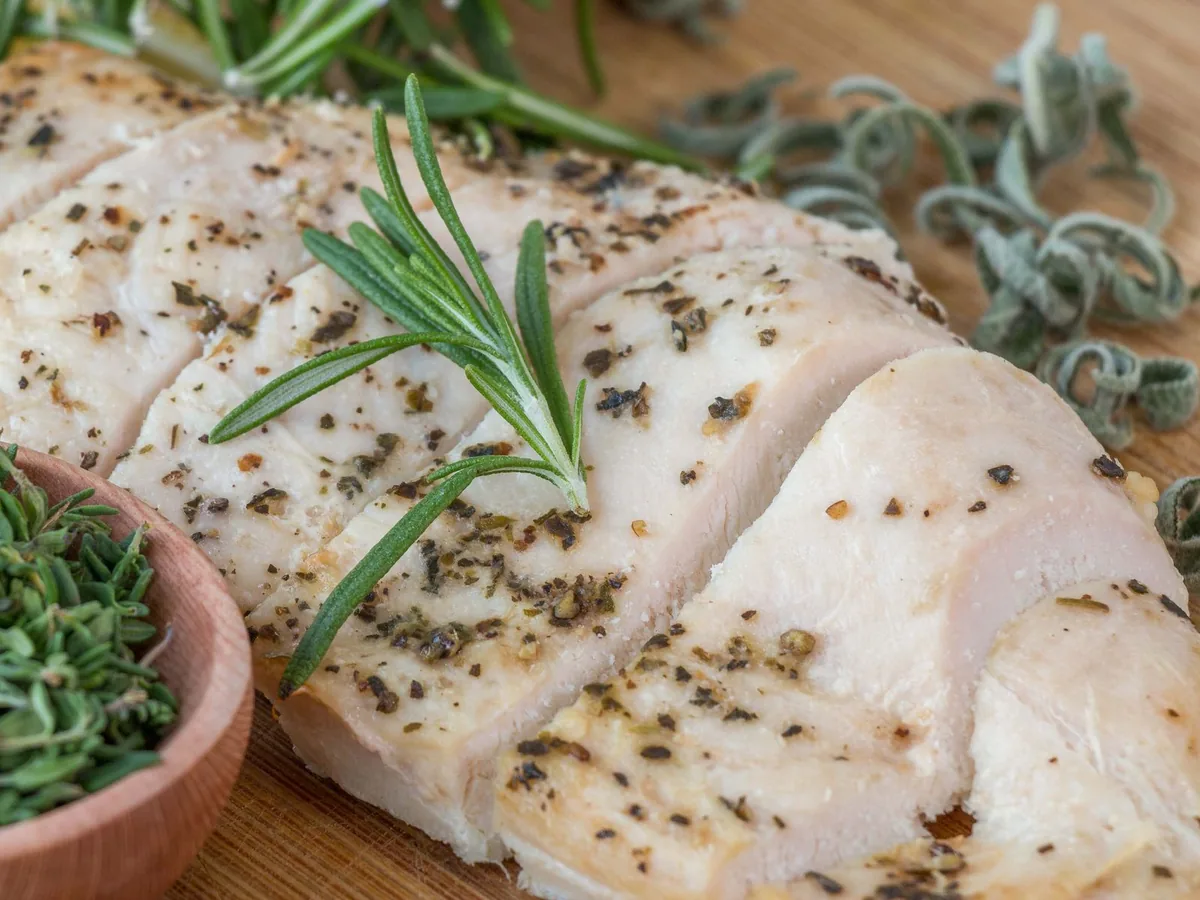
Dry, rubbery chicken breast has ruined many a dinner — but it doesn’t have to be that way. This easy baked chicken breast method fixes the three things that usually go wrong: uneven thickness, under-seasoning, and overcooking. The result is juicy, flavorful chicken with a golden, seasoned crust, ready in about 35 minutes with almost no hands-on work.
Once you learn this technique, baked chicken breast becomes a true weeknight workhorse. Slice it over salads, stuff it into wraps, dice it for pasta, or meal-prep a batch for the week. It’s the same protein, endlessly reinvented.
Prep: 10 minutes | Cook: 22 minutes | Total: 35 minutes | Servings: 4
Easy Baked Chicken Breast
Juicy, flavorful baked chicken breast with a golden seasoned crust — a quick brine, even thickness, and a hot 425°F oven make it foolproof.
Ingredients
- 4 boneless, skinless chicken breasts (about 6 oz each)
- 1 quart cold water
- 1/4 cup kosher salt (for the brine)
- 2 tablespoons olive oil
- 1 teaspoon paprika
- 1 teaspoon garlic powder
- 1 teaspoon onion powder
- 1/2 teaspoon dried thyme
- 1 teaspoon kosher salt
- 1/2 teaspoon black pepper
Instructions
- Brine: Dissolve 1/4 cup kosher salt in 1 quart cold water. Submerge the chicken and refrigerate 15–30 minutes. (Short on time? Skip the brine, salt well, and rest 15 minutes.)
- Preheat the oven: Set the oven to 425°F (220°C). Line a rimmed baking sheet with parchment paper.
- Pound to even thickness: Pat the chicken completely dry. Pound the thick ends to an even 3/4-inch thickness between plastic wrap.
- Season: Rub with olive oil, then coat evenly with paprika, garlic powder, onion powder, thyme, salt, and pepper.
- Bake: Arrange on the pan with space between pieces. Bake 18–22 minutes until the thickest part reads 160–165°F (71–74°C). No flipping needed.
- Rest: Transfer to a cutting board and rest 5 minutes so juices redistribute.
- Slice and serve: Slice against the grain and serve.
Recipe Notes
Keeps 3–4 days refrigerated; freezes up to 3 months. Reheat gently with a splash of broth. Double the batch with two pans — don't crowd the chicken.
Why this recipe works
Chicken breasts are naturally uneven — thick at one end, thin at the other — which means the thin end overcooks before the thick end is done. Pounding the breasts to an even 3/4-inch thickness is the single most important step in this recipe; it guarantees everything cooks at the same rate.
A quick 15-minute brine in salted water (or even just a generous salting) seasons the meat throughout and helps it hold onto moisture in the oven’s dry heat. Finally, a hot 425°F (220°C) oven cooks the chicken fast enough to stay juicy, while a short rest afterward lets the juices redistribute instead of running out onto the cutting board.
Ingredients
- 4 boneless, skinless chicken breasts (about 6 oz / 170g each) — look for breasts of similar size so they cook evenly. Even weight matters more than you’d think.
- 1 quart cold water + 1/4 cup kosher salt (for the brine) — a quick brine is the juiciness insurance policy. Diamond Crystal or Morton’s both work; use the full amount.
- 2 tablespoons olive oil — helps the seasoning stick and promotes browning.
- 1 teaspoon paprika — color and mild sweetness.
- 1 teaspoon garlic powder — savory depth without the burn risk of fresh garlic in a hot oven.
- 1 teaspoon onion powder — rounds out the seasoning blend.
- 1/2 teaspoon dried thyme or Italian seasoning — herbal background note.
- 1 teaspoon kosher salt — for the seasoning rub (the brine seasons the interior; this seasons the crust).
- 1/2 teaspoon black pepper — freshly cracked for the best flavor.
Substitutions
- No time to brine? Skip it and simply salt the chicken generously 15 minutes before baking — you’ll still get good results, just slightly less juicy.
- Different seasoning blends: Swap the spice mix for Cajun seasoning, taco seasoning, lemon-pepper, or Italian seasoning. Use about 1 tablespoon total per 4 breasts.
- Bone-in, skin-on breasts: They need longer — bake at 400°F (200°C) for 35–40 minutes until the thickest part reaches 165°F (74°C).
- Chicken thighs: Boneless thighs bake at the same temperature for about 20 minutes; they’re more forgiving if you overshoot.
- Fresh herbs: Tuck a few sprigs of rosemary or thyme around the chicken in the pan for extra aroma.
Equipment
A rimmed baking sheet or a 9×13-inch baking dish, a meat mallet (or rolling pin) for pounding, and — most importantly — an instant-read thermometer. A thermometer is the difference between guessing and knowing, and it’s the cheapest way to guarantee juicy chicken. If you cook by weight or want to verify portion sizes, a digital kitchen scale is also handy. Line the pan with parchment for the easiest cleanup.
Instructions
- Brine (15 minutes, mostly hands-off). Dissolve 1/4 cup kosher salt in 1 quart of cold water in a large bowl. Submerge the chicken breasts and refrigerate for 15–30 minutes. (If you’re short on time, skip the brine and move to step 2 — just salt the chicken well and let it sit 15 minutes.)
- Preheat the oven. Set the oven to 425°F (220°C). Line a rimmed baking sheet with parchment paper.
- Pound to even thickness. Remove the chicken from the brine and pat completely dry — this is essential for browning. Place the breasts between sheets of plastic wrap or in a zip-top bag and pound the thick ends down to an even 3/4-inch thickness.
- Season. Rub the chicken all over with olive oil, then sprinkle evenly with the paprika, garlic powder, onion powder, thyme, salt, and pepper.
- Bake. Arrange the breasts on the prepared pan with space between them. Bake for 18–22 minutes, until the thickest part registers 160–165°F (71–74°C) on an instant-read thermometer. There is no need to flip.
- Rest. Transfer to a cutting board and rest for 5 minutes. The temperature will rise a few degrees (carryover cooking) and the juices will redistribute.
- Slice and serve. Slice against the grain for the most tender bite. Serve as-is, or slice over salads, grain bowls, or pasta.
Recipe scaling notes
This recipe scales linearly — 8 breasts just need a bigger pan (or two pans) so they aren’t crowded. Crowding steams the chicken instead of roasting it, so leave at least an inch between pieces. For exact seasoning amounts at any batch size, use our Recipe Scaler, and check How to Scale Recipes Without Ruining Them for why oven recipes need pan space more than extra time.
Storage and reheating
Refrigerate in an airtight container for 3–4 days. To reheat without drying out, warm slices in a covered skillet over low heat with a splash of chicken broth, or microwave at 50% power in 30-second bursts. Sliced cold chicken is also excellent straight from the fridge on salads and in Easy Chicken Wraps for Lunch.
Freezing
Cooked chicken breast freezes well for up to 3 months. Cool completely, wrap individual breasts tightly (or slice first for quicker thawing), and store in freezer bags with the air pressed out. Thaw overnight in the refrigerator. For best texture, reheat gently — aggressive reheating is what makes thawed chicken rubbery.
Common mistakes and troubleshooting
- Dry chicken: Overcooked, almost always. Pull the chicken at 160–165°F (74°C) and trust the thermometer over the clock. Every oven runs a little differently.
- Uneven cooking: The breasts weren’t pounded to even thickness. The thin tail will always overcook if you skip this step.
- No browning: The chicken went into the oven wet. Pat it thoroughly dry after brining — moisture is the enemy of browning.
- Bland flavor: Under-seasoned. The brine seasons the inside, but the surface still needs a full, even coating of the spice rub.
- Tough, chewy texture: Sliced with the grain instead of against it. Look for the lines of the muscle fibers and cut across them.
Frequently asked questions
What temperature should baked chicken breast be? 165°F (74°C) in the thickest part, measured with an instant-read thermometer. Pulling it at 160°F and resting 5 minutes also works, since carryover heat brings it up to a safe temperature.
How long do you bake chicken breast at 425°F? For 6-ounce breasts pounded to 3/4-inch thickness, 18–22 minutes. Thicker or larger breasts need more time — always verify with a thermometer rather than the clock alone.
Should I cover chicken breast when baking? No — bake uncovered so the surface browns and the seasoning forms a flavorful crust. Covering traps steam and gives you pale, soft chicken.
Do I need to flip the chicken halfway? No. At 425°F (220°C) with even thickness, the chicken cooks through evenly without flipping.
Can I use frozen chicken breasts? It’s better to thaw them first — frozen breasts cook unevenly and the seasoning won’t stick. Thaw overnight in the fridge, or use the cold-water method (sealed in a bag, submerged in cold water, about an hour).
Why is my chicken always dry even when I follow the time? Ovens vary, and size varies. A thermometer eliminates both variables. It’s the single best investment for anyone who cooks chicken regularly — and it takes the guesswork out of our Simple Baked Salmon with Lemon too.
Nutrition
One serving (one 6-ounce breast) contains an estimated 240 calories, 44g protein, 1g carbohydrates, and 5g fat. These are estimates only, based on standard ingredient data — actual values vary with the exact size of the breasts and how much oil and seasoning adheres. This is a general guide, not medical advice.
The technique that changes everything
Juicy baked chicken breast isn’t luck — it’s even thickness, confident seasoning, a hot oven, and a thermometer. Learn it once and you’ll never suffer through dry chicken again. Next, put those perfect breasts to work in Easy Chicken Wraps for Lunch or slice them over a Simple Mediterranean-style salad.