
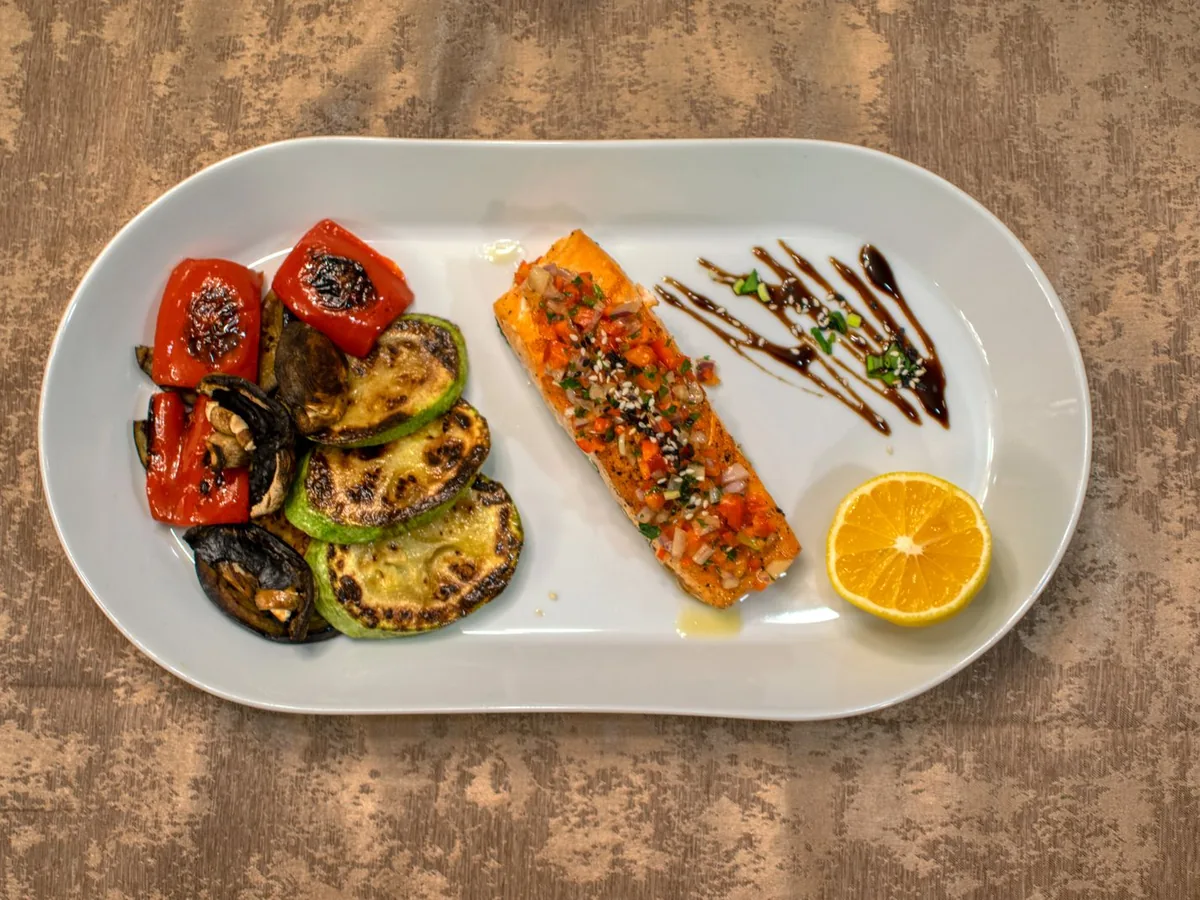
Salmon is one of the fastest proteins you can cook — and one of the easiest to get wrong. This simple baked salmon with lemon keeps it foolproof: fillets brushed with garlic-herb butter, topped with lemon slices, roasted at 400°F (200°C) for about 14 minutes until just opaque and flaky. Dinner is on the table in under 25 minutes, and it tastes like something from a good restaurant.
The lemon does triple duty here: it perfumes the fish as it roasts, its juice keeps the flesh moist, and a fresh squeeze at the end brightens everything. Paired with the garlic butter, it’s a combination that never gets old.
Prep: 10 minutes | Cook: 14 minutes | Total: 24 minutes | Servings: 4
Simple Baked Salmon with Lemon
Juicy baked salmon fillets with garlic-herb butter and lemon, roasted at 400°F in 14 minutes — an easy, healthy weeknight dinner.
Ingredients
- 4 salmon fillets (6 oz each), skin-on or skinless
- 3 tablespoons unsalted butter, melted
- 3 cloves garlic, minced
- 1 teaspoon lemon zest
- 1 lemon, half sliced and half cut into wedges
- 1 tablespoon fresh dill or parsley, chopped
- 1 teaspoon kosher salt
- 1/2 teaspoon black pepper
- 1 tablespoon olive oil
Instructions
- Preheat the oven: Set the oven to 400°F (200°C). Line a rimmed baking sheet with parchment and brush lightly with olive oil.
- Prep the salmon: Pat the fillets completely dry. Check for pin bones and remove any with tweezers.
- Make the garlic-herb butter: Stir together the melted butter, garlic, lemon zest, dill or parsley, salt, and pepper.
- Season: Arrange fillets skin-side down with space between. Brush generously with the butter mixture and top each with 1–2 lemon slices.
- Bake: Roast 12–14 minutes, until the thickest part reads 125°F (52°C) for medium or 130°F (54°C) for medium-well.
- Rest and serve: Rest 3 minutes. Serve with lemon wedges and pan juices spooned over.
Recipe Notes
Keeps 3 days refrigerated; excellent cold on salads. Reheat gently at 275°F (135°C). Cooked salmon freezes up to 2 months, but freezing raw fillets gives better results.
Why this recipe works
High, direct heat is the key to salmon that stays moist. At 400°F (200°C), the exterior sets quickly, sealing in juices, while the interior cooks through in minutes — before the proteins have time to seize and squeeze out moisture. Low-and-slow is what makes salmon dry and chalky.
The garlic-herb butter bastes the fish as it melts, adding flavor and preventing the surface from drying. Lemon slices on top act as little shields, protecting the most delicate part of the fillet while infusing citrus aroma. And pulling the salmon at 125–130°F (52–54°C) for medium — letting carryover heat finish the job — gives you that silky, just-opaque center instead of an overcooked wedge.
Ingredients
- 4 salmon fillets (6 oz / 170g each), skin-on or skinless — similar thickness matters more than anything; 1 to 1 1/4 inches thick is ideal. Wild or farmed both work.
- 3 tablespoons unsalted butter, melted — carries the garlic and herbs and keeps the surface moist.
- 3 cloves garlic, minced — classic pairing with both salmon and lemon.
- 1 teaspoon lemon zest + 1 lemon, half sliced and half cut into wedges — zest in the butter for deep citrus flavor, slices for roasting, wedges for serving.
- 1 tablespoon fresh dill or parsley, chopped — dill is the classic salmon herb; parsley is milder.
- 1 teaspoon kosher salt — salmon needs confident seasoning.
- 1/2 teaspoon black pepper — freshly cracked.
- 1 tablespoon olive oil — for the pan, to prevent sticking.
Substitutions
- Different fish: This method works for arctic char, trout, or thick cod fillets — adjust time by thickness (see FAQ).
- Dairy-free: Use olive oil instead of butter; the result is lighter but still delicious.
- Dried herbs: Use 1 teaspoon dried dill or Italian seasoning instead of fresh (dried herbs are more concentrated).
- No lemon? Lime works in a pinch, or use a splash of white wine in the pan.
- Add vegetables: Toss asparagus, green beans, or cherry tomatoes on the same pan — they roast in the salmon’s flavorful drippings. Our Easy Roasted Vegetable Bowl uses the same high-heat roasting principles.
- Honey glaze: Whisk 1 tablespoon of honey into the butter for a sweet-savory crust.
Equipment
A rimmed baking sheet lined with parchment (easy cleanup, no sticking) is all you really need. An instant-read thermometer takes the guesswork out of doneness — the single best tool for cooking fish confidently. If you buy fillets by weight or portion a whole side yourself, a digital kitchen scale keeps servings even.
Instructions
- Preheat the oven. Set the oven to 400°F (200°C). Line a rimmed baking sheet with parchment and brush lightly with olive oil.
- Prep the salmon. Pat the fillets completely dry with paper towels — dry fish browns and crisps instead of steaming. Check for pin bones by running a finger along the flesh; pull any you find with tweezers.
- Make the garlic-herb butter. Stir together the melted butter, minced garlic, lemon zest, chopped dill or parsley, salt, and pepper.
- Season. Arrange the fillets skin-side down (if skin-on) with space between them. Brush generously all over with the garlic-herb butter. Lay 1–2 lemon slices on each fillet.
- Bake. Roast for 12–14 minutes, until the thickest part reads 125°F (52°C) for medium or 130°F (54°C) for medium-well on an instant-read thermometer. The flesh should flake gently when pressed but still look slightly translucent in the very center — carryover heat finishes it.
- Rest and serve. Rest 3 minutes. Serve with the lemon wedges for squeezing and any pan juices spooned over the top.
Recipe scaling notes
Salmon scales effortlessly — the method is identical whether you’re cooking 2 fillets or 12. The only rule: don’t crowd the pan, and use two sheet pans for large batches so hot air circulates. Cooking time stays the same as long as fillet thickness is consistent. For exact butter and seasoning amounts at any count, use our Recipe Scaler, and see How to Scale Recipes Without Ruining Them for why thickness — not quantity — sets the timer.
Storage and reheating
Refrigerate leftovers in an airtight container for up to 3 days. Salmon is excellent cold — flake it over salads or into Easy Chicken Wraps-style wraps (with salmon instead). To reheat, warm gently in a 275°F (135°C) oven for 10–12 minutes until just heated through; the microwave makes it rubbery and is best avoided.
Freezing
Cooked salmon freezes for up to 2 months, though the texture is best fresh. Cool completely, wrap tightly, and freeze. Thaw overnight in the fridge. Better yet: freeze raw fillets (they keep 3 months) and cook this recipe fresh — it only takes 25 minutes.
Common mistakes and troubleshooting
- Dry salmon: Overcooked — the most common salmon sin. Use a thermometer and pull at 125–130°F (52–54°C). Remember it keeps cooking off the heat.
- White stuff oozing out: That’s albumin, a harmless protein. It appears when salmon is cooked too hot or too fast — gentler heat and pulling it earlier minimize it. It’s safe to eat.
- Stuck to the pan: The pan wasn’t oiled, or the fish was moved too soon. Parchment paper eliminates this entirely.
- Fishy smell: Old fish. Fresh salmon should smell like the ocean, not “fishy.” Buy from a trusted source and cook within 1–2 days.
- Uneven cooking: Fillets of different thicknesses. Buy uniform fillets, or fold thin tail ends under to even them out.
Frequently asked questions
What temperature should baked salmon be? 125°F (52°C) for medium (silky, slightly translucent center) or 130°F (54°C) for medium-well. The FDA recommends 145°F (63°C), which most chefs consider overcooked — the choice is yours, but a thermometer lets you hit your target precisely.
How long do you bake salmon at 400°F? 12–14 minutes for 1-inch-thick fillets. Add 2–3 minutes per extra 1/4 inch of thickness.
Should I bake salmon skin-side up or down? Skin-side down, always, for baking — the skin protects the flesh from the hot pan and crisps beautifully. (Skin-side up is for searing in a skillet.)
Can I use frozen salmon fillets? Thaw them first for the best results — overnight in the fridge, or sealed in cold water for 30–45 minutes. Baking from frozen works in a pinch but cooks unevenly; add 5–8 minutes and expect a softer texture.
Wild vs. farmed salmon — does it matter here? Both work. Wild salmon is leaner and cooks a minute or two faster; farmed is fattier and more forgiving. Choose what fits your budget and values.
What sides go with baked salmon? Our Easy Oven-Roasted Potatoes and a green salad make the classic plate. It’s also wonderful over rice or with roasted asparagus.
Nutrition
One serving (one 6-ounce fillet) contains an estimated 320 calories, 36g protein, 2g carbohydrates, and 18g fat. These are estimates only, based on standard ingredient data — actual values vary with the salmon type (wild vs. farmed), fillet size, and butter amount. This is a general guide, not medical advice.
Weeknight salmon, perfected
This simple baked salmon with lemon is the recipe that converts salmon skeptics: fast, forgiving, and genuinely delicious. Once the thermometer habit is in place, try the same confidence on chicken with our Easy Baked Chicken Breast.