
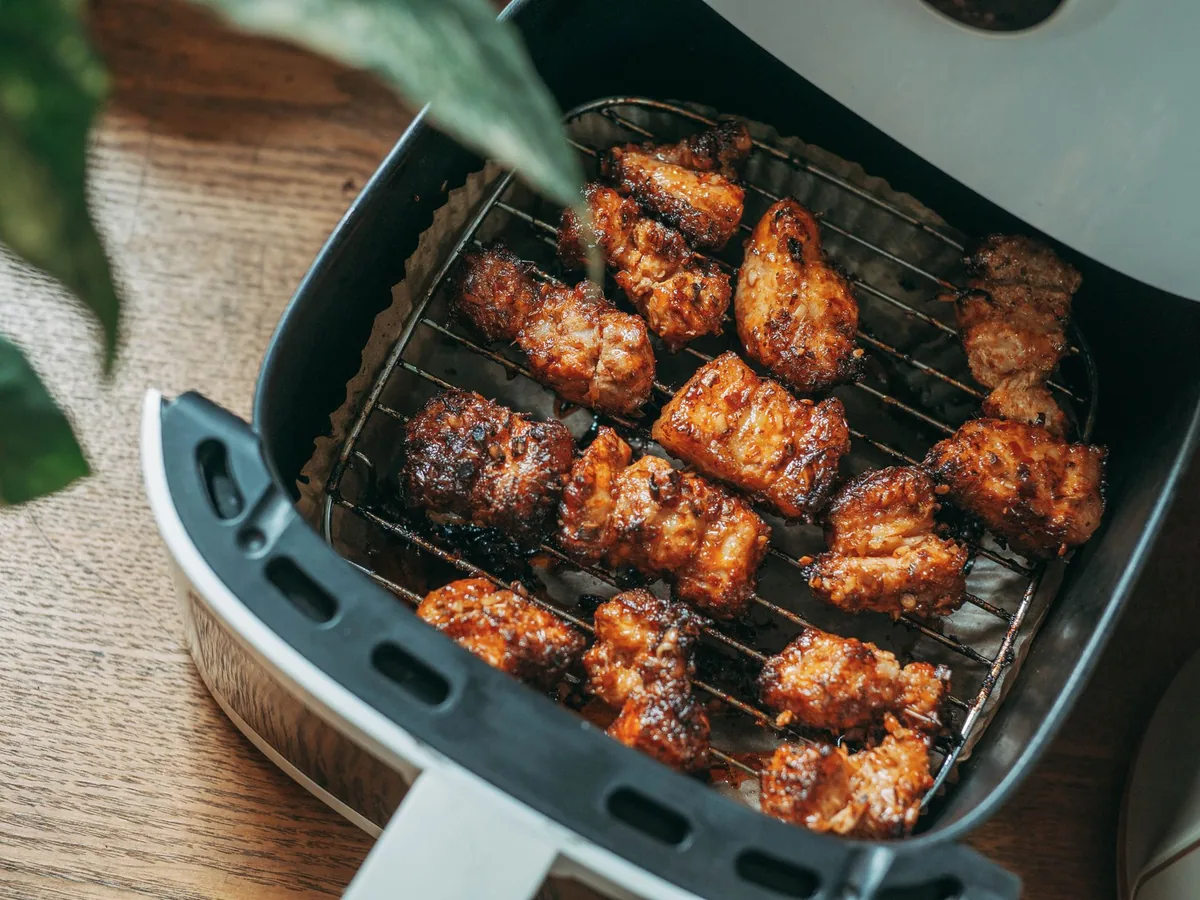
An air fryer might be the hardest-working small appliance you can put on your counter. It crisps frozen fries, roasts vegetables, reheats pizza better than a microwave ever could, and cooks chicken wings that rival the deep-fried kind — with a fraction of the oil and barely any preheating.
If yours is still in the box (or you’ve used it twice and feel unsure), this guide is for you. You’ll learn how an air fryer actually works, the core techniques that make food crispy instead of soggy, what to cook first, the mistakes every beginner makes, and how to keep the thing clean.
How an Air Fryer Actually Works
Despite the name, there’s no frying involved. An air fryer is a small, powerful convection oven: a heating element plus a strong fan circulates super-hot air around your food at high speed. Because the cooking chamber is tiny compared to a regular oven, food cooks faster and the surface dries out and browns quickly — that’s what creates the crispy “fried” texture.
Two practical consequences follow from this:
- It preheats in minutes. Most air fryers reach temperature in 2–5 minutes, versus 10–15 for a full-size oven.
- It cooks hotter and faster than you expect. Air fryer recipes generally call for lower temperatures and shorter times than oven recipes — a common conversion is to reduce the oven temperature by about 25°F (around 15°C) and check for doneness about 20% earlier.
The Core Techniques (Master These Five)
1. Preheat it. Give the air fryer 2–5 minutes to reach temperature before food goes in, just like an oven. Food that starts in a cold basket steams before it crisps.
2. Don’t overcrowd the basket. This is the number-one rule. Hot air needs to circulate around every piece. Arrange food in a single layer with a little space between pieces. Cooking in two smaller batches beats one crowded, soggy batch every time.
3. Pat food dry and use a little oil. Moisture is the enemy of crispiness. Pat vegetables, chicken, and tofu dry with paper towels, then toss with a thin coating of oil — a teaspoon or two is usually plenty. The oil helps browning and promotes even crisping.
4. Shake or flip halfway. Pull the basket out midway through cooking and shake it (for fries, wings, vegetables) or flip items with tongs (for larger pieces). This exposes all sides to the circulating air for even browning.
5. Check early. Air fryers cook fast and models vary. Start checking a few minutes before the recipe’s stated time. You can always add minutes; you can’t un-burn dinner.
Temperatures and Times: A Starter Chart
Every model runs a little differently, so treat these as starting points and adjust to your machine:
| Food | Temperature | Time | Notes |
|---|---|---|---|
| Frozen french fries | 400°F (200°C) | 12–18 min | Shake halfway |
| Chicken wings | 380–400°F (190–200°C) | 20–25 min | Flip halfway; pat very dry |
| Chicken breast | 375°F (190°C) | 15–20 min | Pound to even thickness |
| Salmon fillets | 390°F (200°C) | 8–12 min | Skin-side down if applicable |
| Roasted vegetables | 400°F (200°C) | 12–18 min | Single layer, don’t crowd |
| Potato wedges | 400°F (200°C) | 18–25 min | Soak cut potatoes 30 min, then dry well |
| Tofu cubes | 375–400°F (190–200°C) | 12–18 min | Press and dry first; shake halfway |
| Brussels sprouts | 375°F (190°C) | 12–18 min | Halve them; cut side gets crispiest |
| Cauliflower florets | 390°F (200°C) | 12–16 min | Toss in oil and seasoning |
For cooked meats, a food thermometer is the reliable way to confirm doneness — for example, poultry should reach 165°F (74°C) internally.
What to Cook First
If you’re just starting out, begin with forgiving foods that show off what the appliance does best:
- Air fryer potato wedges — the classic first cook; crispy outside, fluffy inside.
- Air fryer chicken wings — shatteringly crisp skin with barely any oil.
- Air fryer salmon — fast, moist, and nearly foolproof.
- Air fryer roasted vegetables — caramelized edges in half the oven time.
- Air fryer tofu — golden, chewy-crisp cubes for bowls and stir-fries.
Once you’re comfortable, branch out to air fryer cauliflower, air fryer chicken breast, air fryer sweet potato fries, and air fryer Brussels sprouts.
What Doesn’t Work Well in an Air Fryer
Knowing the limits saves you from sad experiments:
- Wet batters (like tempura or beer batter) drip straight through the basket before they set. Breaded coatings (flour → egg → breadcrumbs) work; liquid batters don’t.
- Large roasts or whole chickens that fill the chamber block airflow — the outside overcooks while the inside lags.
- Cheese-heavy items without containment (a loose grilled cheese can drip; a cheese-topped dish in a pan insert is fine).
- Very light leafy greens like raw spinach can blow around in the fan’s airflow.
- Popcorn kernels can fly up into the heating element.
- Anything needing lots of liquid — soups, stews, and saucy braises belong on the stovetop.
Accessories Worth Having (and Skipping)
You don’t need much. A perforated parchment liner (or reusable silicone liner) makes cleanup dramatically easier — just make sure it’s weighed down by food and never blocks all the airflow. A small oven-safe pan or ramekins let you cook saucy items or bake small portions. Tongs with silicone tips are essential for flipping without scratching the basket.
Skip the giant accessory kits until you know what you actually cook. Most beginners use liners and tongs daily and never touch the rest.
Cleaning and Maintenance
Clean the basket and tray after every use — baked-on grease gets harder to remove with each round.
- Let the basket cool slightly, then wash with hot soapy water and a soft sponge. For stuck-on food, soak in hot soapy water for 10–15 minutes first.
- Avoid metal scouring pads and harsh abrasives, which damage the nonstick coating on most baskets.
- Wipe the interior of the unit with a damp cloth; clean the heating element area gently once cooled if you see grease spatter.
- Dry everything thoroughly before reassembling to prevent musty smells.
- Every so often, check the vent at the back — keep it clear of obstructions for proper airflow.
If odors linger, running the empty fryer for a few minutes after cleaning usually clears them.
Safety Considerations
- It gets hot — everywhere. The basket, tray, and the air blasting out when you open it are all burn risks. Use oven mitts and open the basket away from your face to avoid the steam burst.
- Give it breathing room. Keep the air fryer a few inches from walls and off the stovetop; the rear vent needs clear airflow, and a hot burner underneath is a fire risk.
- Don’t leave it running unattended for long stretches, especially with fatty foods that can smoke.
- Unplug when finished. Like any heating appliance, it’s safest disconnected when not in use.
- Keep the cord away from heat and never immerse the main unit in water — only the removable basket and tray are washable.
Common Beginner Mistakes
- Overcrowding the basket. Piled-up food steams instead of crisping. Cook in batches.
- Skipping the preheat. Cold starts lead to uneven cooking and soggy spots.
- Using too much oil — or none at all. A light coating crisps best; a heavy hand makes food greasy, and bone-dry food can taste parched.
- Never shaking the basket. One shake halfway through is the difference between evenly golden and half-pale.
- Cooking straight from the package instructions. Frozen food bags give oven directions — reduce the temperature and check early.
- Forgetting it’s basically a small oven. Anything you’d bake — reheating pizza, roasting nuts, warming bread — usually works brilliantly.
Frequently Asked Questions
Do I need to use oil in an air fryer?
Not always, but a little helps. Fatty foods like chicken wings render their own fat and need none. Lean foods like vegetables, tofu, and chicken breast crisp up much better with a light coating of oil — a teaspoon or two tossed through is usually enough.
Can I put aluminum foil or parchment paper in an air fryer?
Yes, with caveats. Both are fine as long as they’re weighed down by food (loose paper can blow into the heating element) and don’t cover the entire basket floor — airflow is the whole point. Perforated parchment liners made for air fryers are the easiest option. Never preheat with just paper inside.
How is an air fryer different from a convection oven?
The principle is the same — fan-circulated hot air — but the air fryer’s tiny chamber and powerful fan make it faster and better at crisping small batches. A convection oven wins for large quantities.
Can I cook raw meat in an air fryer?
Absolutely — chicken, pork, fish, and more cook well from raw. Use a food thermometer to verify safe internal temperatures (165°F/74°C for poultry, for example), and avoid massively thick cuts that the outside overcooks before the center is done.
Why is my food coming out dry?
Usually one of three causes: the temperature was too high, it cooked too long, or lean food went in with no oil at all. Lower the heat slightly, check earlier, and give lean items a light oil coating.
Do I really need to preheat?
For best crisping, yes — 2 to 5 minutes is all it takes. Skipping it matters most for foods where the initial blast of heat sets the crust, like fries and breaded items.
The Bottom Line
An air fryer rewards a few simple habits: preheat it, don’t crowd it, pat food dry, add a whisper of oil, and shake halfway. Do those five things and you’ll get crispy potato wedges, juicy chicken breast, and caramelized Brussels sprouts on your first week. Start with one forgiving recipe, learn your machine’s quirks, and this little appliance will quickly earn its counter space.