
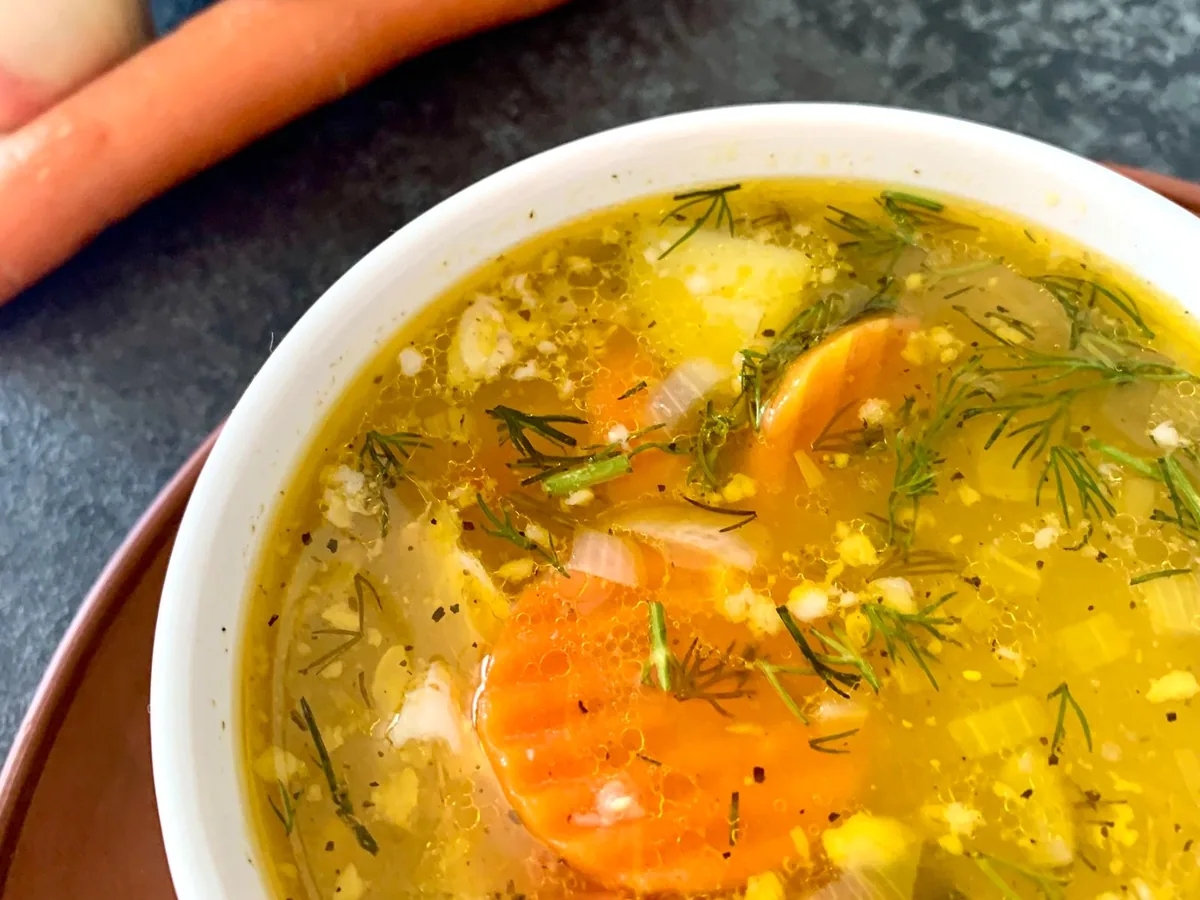
There is a particular kind of tired that only a bowl of homemade vegetable soup can fix. This version is built for busy days: one pot, 45 minutes, and whatever vegetables you have on hand turn into a hearty, nourishing soup that tastes like you spent the whole afternoon on it. It’s naturally vegan, endlessly adaptable, and somehow even better the next day.
Unlike canned soup — which often tastes mostly of salt — this recipe layers real flavor: aromatics softened in olive oil, a proper simmer with herbs, and a bright finish of lemon that wakes everything up. Keep the base technique in your pocket and you can riff on it all winter long.
Prep: 15 minutes | Cook: 30 minutes | Total: 45 minutes | Servings: 6
Homemade Vegetable Soup for Busy Days
A hearty, healthy vegetable soup with everyday vegetables, ready in 45 minutes. Naturally vegan, freezer-friendly, and endlessly customizable.
Ingredients
- 2 tablespoons olive oil
- 1 large yellow onion, diced
- 3 medium carrots, sliced into 1/4-inch rounds
- 3 celery stalks, sliced
- 4 cloves garlic, minced
- 1 teaspoon kosher salt, plus more to taste
- 1/2 teaspoon black pepper
- 1 teaspoon dried thyme
- 1/2 teaspoon dried oregano
- 1 can (14.5 oz) diced tomatoes
- 2 medium Yukon Gold potatoes, diced into 1/2-inch cubes
- 6 cups vegetable broth
- 1 Parmesan rind (optional)
- 2 cups chopped kale or spinach
- 1 tablespoon lemon juice
- Fresh parsley, for serving (optional)
Instructions
- Soften the aromatics: Heat the olive oil in a large soup pot over medium heat. Cook the onion, carrots, and celery with a pinch of salt for 6–8 minutes until the onion is translucent.
- Add garlic and herbs: Stir in the garlic, thyme, and oregano; cook 1 minute until fragrant.
- Build the base: Add the diced tomatoes, potatoes, salt, and pepper. Stir and cook 2 minutes.
- Add the broth: Pour in the vegetable broth and add the Parmesan rind if using. Bring to a boil, then reduce to a gentle simmer.
- Simmer: Cover partially and simmer 20 minutes, until the potatoes are fork-tender.
- Wilt the greens: Stir in the kale or spinach and simmer 3–5 minutes more until bright green and wilted.
- Finish: Remove the Parmesan rind. Stir in the lemon juice, then taste and adjust salt and pepper.
- Serve: Ladle into bowls and top with fresh parsley. Serve with crusty bread.
Recipe Notes
Keeps 5 days refrigerated; flavor improves overnight. Freezes up to 3 months — freeze before adding greens for best color. Scales easily; a doubled batch may need 5–10 extra minutes of simmering.
Why this recipe works
Great vegetable soup is about order of operations. The onion, carrots, and celery go in first and get a real head start — they need time to soften and sweeten. Garlic goes in later so it doesn’t burn. Diced potatoes or other dense vegetables join early enough to cook through, while tender greens like spinach or kale go in at the very end so they stay bright instead of turning army-green and mushy.
Tomatoes add body and a gentle acidity that makes the broth taste more complex than the sum of its parts, and a Parmesan rind — if you have one saved in the freezer — melts into the background and adds a savory depth you can’t quite place. The final squeeze of lemon is non-negotiable: it lifts every flavor in the pot.
Ingredients
- 2 tablespoons olive oil — for softening the aromatics; it adds body to the finished broth.
- 1 large yellow onion, diced — the sweet backbone of the soup.
- 3 medium carrots, peeled and sliced into 1/4-inch rounds — classic sweetness and color.
- 3 celery stalks, sliced — the third member of the mirepoix trio; adds savory depth.
- 4 cloves garlic, minced — added after the vegetables soften so it stays sweet, not bitter.
- 1 teaspoon kosher salt, plus more to taste — soups need confident seasoning; under-salted soup tastes flat.
- 1/2 teaspoon black pepper — gentle warmth.
- 1 teaspoon dried thyme — earthy and classic with root vegetables.
- 1/2 teaspoon dried oregano — rounds out the herb profile.
- 1 can (14.5 oz) diced tomatoes — adds body, acidity, and a little sweetness.
- 2 medium Yukon Gold potatoes, diced into 1/2-inch cubes — make the soup hearty; Yukon Golds hold their shape.
- 6 cups vegetable broth — the base; use a brand you like the taste of, since it matters here.
- 1 Parmesan rind (optional) — the secret weapon for savory depth; fish it out before serving.
- 2 cups chopped kale or spinach — added at the end for color and nutrition.
- 1 tablespoon lemon juice — the finishing touch that makes everything taste brighter.
- Fresh parsley, for serving (optional)
Substitutions
- Any vegetables you have: Swap in zucchini, green beans, bell peppers, corn, or peas. Add quick-cooking vegetables in the last 10 minutes.
- Sweet potatoes instead of white potatoes: They add lovely sweetness and extra nutrition; dice them the same size.
- Chicken broth: If you’re not keeping it vegetarian, chicken broth makes a slightly richer soup.
- No Parmesan rind: A splash of soy sauce or a teaspoon of miso paste stirred in at the end adds similar savory depth.
- Beans for protein: Add a can of drained white beans or chickpeas with the broth to make it a complete meal.
- Grains: Stir in 1/2 cup of small pasta, barley, or farro with the potatoes — add an extra cup of broth since grains absorb liquid. (Add cooked grains to leftovers when reheating so they don’t turn mushy.)
Equipment
A large soup pot or Dutch oven (5–6 quarts) with a lid is the main requirement. You’ll do a fair amount of chopping, so a sharp chef’s knife and a sturdy cutting board make the prep genuinely pleasant — see our guide on how to choose the right chef’s knife if chopping feels like a chore. A wooden spoon, a ladle, and an immersion blender (optional, for a partially blended texture) round out the kit.
Instructions
- Soften the aromatics. Heat the olive oil in a large soup pot over medium heat. Add the onion, carrots, and celery with a pinch of salt. Cook, stirring occasionally, for 6–8 minutes until the onion is translucent and the vegetables are beginning to soften.
- Add garlic and herbs. Stir in the garlic, thyme, and oregano. Cook for 1 minute until fragrant — you’ll smell the moment it turns.
- Build the base. Add the diced tomatoes with their juices, the potatoes, and the remaining salt and pepper. Stir to combine and let the tomatoes cook for 2 minutes.
- Add the broth. Pour in the vegetable broth and add the Parmesan rind if using. Bring to a boil, then reduce to a gentle simmer.
- Simmer. Cover partially (leave the lid ajar so some steam escapes) and simmer for 20 minutes, until the potatoes are tender when pierced with a fork.
- Wilt the greens. Stir in the kale or spinach and simmer 3–5 minutes more, until wilted and bright green.
- Finish. Remove the Parmesan rind. Stir in the lemon juice. Taste and adjust salt and pepper — this is the step that separates good soup from great soup.
- Serve. Ladle into bowls, top with fresh parsley if you like, and serve with crusty bread for dunking.
Recipe scaling notes
Soup is wonderfully forgiving to scale: double everything straight across for a big batch, or halve it for a small pot. The one thing to watch is the simmering time — a doubled batch in a very full pot may need 5–10 extra minutes for the vegetables to cook through. Our Recipe Scaler handles the math instantly, and How to Scale Recipes Without Ruining Them explains the small adjustments that keep big batches tasting right.
Storage and reheating
Refrigerate in airtight containers for up to 5 days — the flavor actually deepens overnight. Reheat on the stovetop over medium heat until steaming, or microwave individual portions. If you added pasta or grains, expect them to absorb broth; just stir in a splash of water or broth when reheating. Soups like this one and our Homemade Chicken Noodle Soup are meal-prep gold.
Freezing
This soup freezes beautifully — it’s one of the best freezer meals you can make. Cool completely, portion into freezer-safe containers leaving an inch of headspace, and freeze for up to 3 months. Thaw overnight in the fridge and reheat on the stove. Two tips: freeze before adding the greens (add fresh greens when reheating for the best color), and skip freezing any portions with pasta in them. Our full guide to freezing homemade meals properly covers containers, labeling, and thawing in detail.
Common mistakes and troubleshooting
- Bland soup: Almost always under-seasoning. Add salt in stages and taste at the end — you may need more than you think. The lemon juice also helps enormously.
- Mushy vegetables: They were cut too small or cooked too long. Keep dice around 1/2 inch and add tender vegetables later in the cook.
- Greens turned dull and gray: They simmered too long. Greens only need 3–5 minutes at the very end.
- Too thick: Stir in more broth until it reaches the consistency you like — thickness is a preference, not a rule.
- Too thin: Simmer uncovered for 10 minutes to reduce, or blend a ladleful of the soup and stir it back in for natural body.
- Potatoes falling apart: Overcooked. Start checking at 18 minutes; they should be just tender, not crumbling.
Frequently asked questions
Can I make this in a slow cooker? Yes. Sauté the aromatics first for the best flavor (or skip it if you’re truly pressed for time), then combine everything except the greens and lemon in the slow cooker. Cook on low 6–7 hours or high 3–4 hours, add the greens for the last 30 minutes, and finish with lemon.
Is this soup vegan? As written, yes — except the optional Parmesan rind. Skip it (or use the miso trick) and the soup is fully vegan.
Can I use frozen vegetables? Absolutely. Frozen mixed vegetables, corn, peas, and green beans can go straight in with the broth — no thawing needed. They’re picked and frozen at peak ripeness, so they’re genuinely nutritious.
How do I make it more filling? Add a can of white beans or chickpeas, or serve it over cooked rice or with a grilled cheese sandwich. For a heartier bowl-style meal, try our Easy Roasted Vegetable Bowl.
Why add lemon juice to soup? Acid is the finishing touch most home cooks skip. A small amount of lemon juice doesn’t make the soup taste lemony — it makes every other flavor taste more like itself.
Can I blend it? Yes — use an immersion blender to partially blend for a thicker, creamier texture while keeping some chunky vegetables. Blend fully for a smooth soup, then thin with broth to your liking.
Nutrition
One serving (about 1 1/2 cups) contains an estimated 180 calories, 5g protein, 34g carbohydrates, and 4g fat. These are estimates only, calculated from standard ingredient data — actual values vary with your vegetable mix, broth brand, and portion size. This is a general guide, not medical advice.
The soup that saves busy days
Keep this homemade vegetable soup in your back pocket and you’ll never be more than 45 minutes from a genuinely nourishing dinner. Make a double batch on Sunday, freeze half, and future-you will be very grateful. For another one-pot comfort classic, our Easy One-Pot Chicken and Rice delivers the same minimal-cleanup magic.