
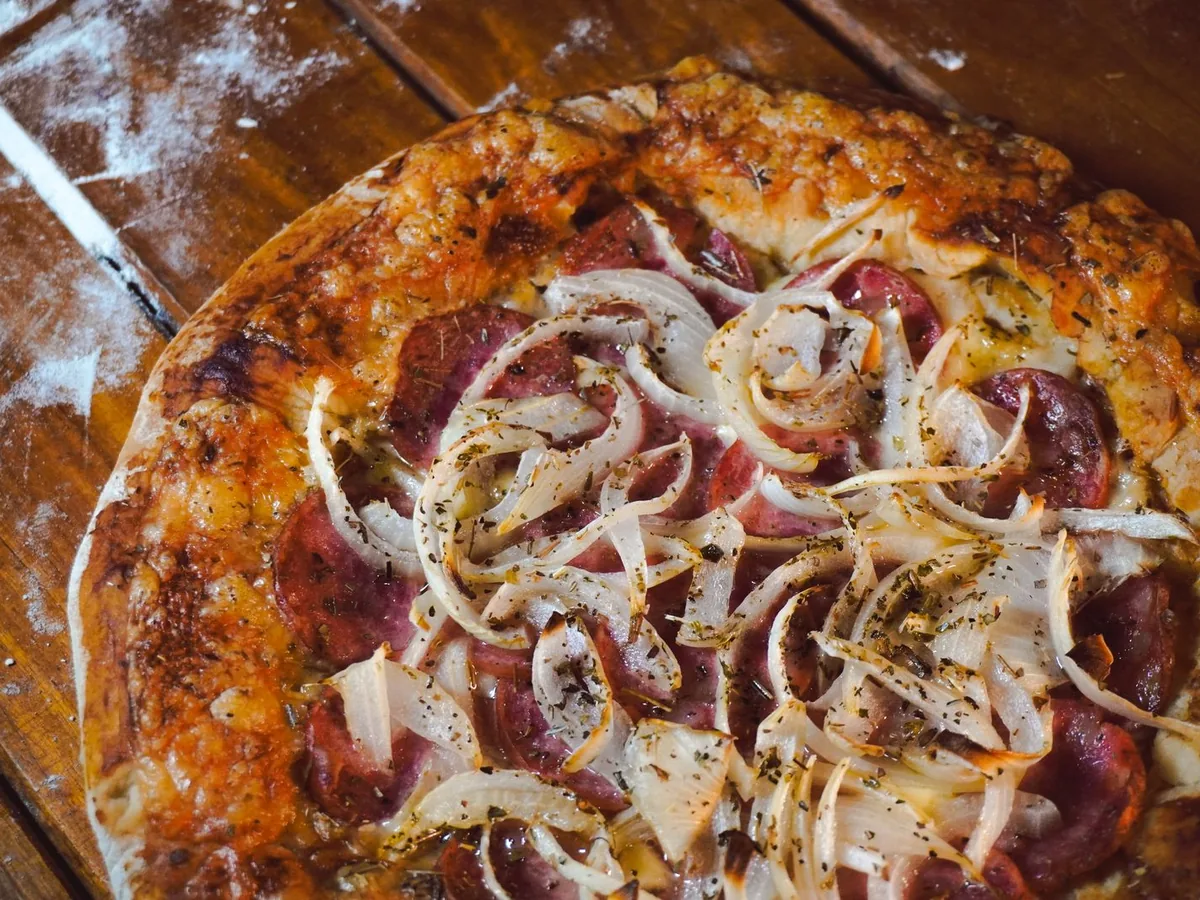
Making pizza at home sounds intimidating until you realize the dough is just four ingredients and ten minutes of your attention. This simple homemade pizza recipe walks you through an easy, forgiving dough — no stand mixer, no special skills — plus the blazing-hot baking method that gives you a puffy, chewy crust with those beautiful charred spots. Total time is under two hours, and most of that is the dough rising while you do something else.
Once you taste a pizza that went from your oven to your plate in minutes — the cheese still bubbling, the crust crackling — delivery starts to feel like a compromise. And the dough formula here becomes your base for calzones, flatbreads, and garlic knots too.
Prep: 20 minutes (+ 1 hour rising) | Cook: 12 minutes per pizza | Total: 1 hour 35 minutes | Servings: 4 (makes two 12-inch pizzas)
Simple Homemade Pizza for Beginners
Simple homemade pizza for beginners: an easy 4-ingredient dough, maximum-heat baking method, and classic Margherita toppings — better than delivery.
Ingredients
- 3 1/2 cups (440g) bread flour or all-purpose flour
- 1 1/2 cups (355ml) warm water (105-115°F / 40-46°C)
- 2 1/4 teaspoons (1 packet) instant yeast
- 2 tablespoons olive oil, plus more for the bowl
- 2 teaspoons kosher salt
- 1 teaspoon sugar or honey
- 1/3 cup crushed San Marzano-style tomatoes, drained slightly (per pizza)
- 6 oz fresh mozzarella, torn and patted dry (per pizza)
- Fresh basil leaves
- Olive oil, salt, and red pepper flakes, to finish
Instructions
- Mix the dough: Whisk flour, yeast, sugar, and salt. Add warm water and olive oil; stir into a shaggy dough, then knead 5–7 minutes until smooth and slightly tacky.
- First rise: Shape into a ball in an oiled bowl, cover, and rise 1 hour in a warm spot until doubled.
- Preheat aggressively: Place a stone, steel, or upside-down sheet pan on the top rack and preheat the oven to maximum (500°F / 260°C or higher) for at least 45 minutes.
- Divide and shape: Divide into 2 balls. Stretch one by hand into a 12-inch round with a thicker rim; no rolling pin.
- Top sparingly: On parchment, spread 1/3 cup tomatoes, scatter torn mozzarella, and drizzle with olive oil.
- Bake: Slide onto the hot surface. Bake 10–12 minutes until puffed, golden with charred spots, and bubbling.
- Finish and serve: Top with basil, salt, red pepper flakes, and olive oil. Slice and serve immediately. Repeat with the second ball.
Recipe Notes
Dough balls freeze up to 3 months; thaw overnight in the fridge. Leftover pizza keeps 4 days; reheat in a hot skillet. Dough doubles cleanly — bake one pizza at a time.
Why this recipe works
Great homemade pizza is about heat and hydration. This dough uses a 65% hydration ratio (water weight relative to flour) — wet enough for an open, airy crumb, dry enough to handle without a fight. A full hour’s rise develops flavor and relaxes the gluten so the dough stretches instead of springing back.
The oven goes as hot as it will go — 500°F (260°C) or higher — because home ovens can’t match a pizza oven’s 900°F, so we compensate with maximum heat plus a preheated surface (a pizza stone, steel, or even an upside-down sheet pan). That thermal mass blasts the bottom of the crust so it crisps instead of steaming. And restraint with toppings — less is genuinely more — keeps the center from going soggy.
Ingredients
For the dough (makes two 12-inch pizzas): – 3 1/2 cups (440g) bread flour or all-purpose flour — bread flour gives a chewier crust; all-purpose is more tender. Either works. – 1 1/2 cups (355ml) warm water (105–115°F / 40–46°C) — warm, not hot; hot water kills yeast. – 2 1/4 teaspoons (1 packet) instant yeast — instant yeast needs no proofing; active dry works too (proof it in the water with a pinch of sugar first). – 2 tablespoons olive oil, plus more for the bowl — tenderness and flavor in the crust. – 2 teaspoons kosher salt — flavor; add after the flour so it doesn’t inhibit the yeast directly. – 1 teaspoon sugar or honey — feeds the yeast and aids browning.
For a classic Margherita topping (per pizza): – 1/3 cup crushed San Marzano-style tomatoes, drained slightly — less is more; too much sauce = soggy center. – 6 oz fresh mozzarella, torn and patted dry — patting dry prevents a watery pizza. – Fresh basil leaves — added after baking so they don’t burn. – Olive oil, salt, and red pepper flakes — to finish.
Substitutions
- No yeast / no time: Use a no-yeast dough (flour + baking powder + yogurt) for a biscuit-like crust in 30 minutes — good, but not the same chew.
- Whole wheat: Swap up to half the flour for white whole wheat; add 2 extra tablespoons of water.
- Gluten-free: Use a gluten-free pizza flour blend with xanthan gum; the dough will be stickier — press it into shape instead of stretching.
- Topping ideas: Pepperoni, sautéed mushrooms, caramelized onions, roasted peppers, olives, prosciutto (after baking), or a white pizza with ricotta and garlic.
- Sauce swaps: Pesto, BBQ sauce, or just garlic-infused olive oil.
- Cheese: Low-moisture mozzarella melts best and browns beautifully; fresh mozzarella is creamier but wetter — hence the patting dry.
Equipment
A large mixing bowl, a baking sheet (or pizza stone/steel if you have one), and parchment paper. A pizza peel is nice but not required — parchment on the back of a sheet pan works as a launch pad. For the most accurate dough, weigh the flour with a digital kitchen scale — it’s the single biggest upgrade to your baking. Our essential baking tools for beginners covers the rest of the kit worth owning.
Instructions
- Mix the dough. In a large bowl, whisk the flour, yeast, sugar, and salt. Add the warm water and olive oil. Stir with a wooden spoon until a shaggy dough forms, then knead in the bowl for 5–7 minutes until smooth and slightly tacky. (It should stick a little to your fingers but release cleanly.)
- First rise. Shape into a ball, place in a lightly oiled bowl, cover with a damp towel or plastic wrap, and let rise in a warm spot for 1 hour, until doubled in size.
- Preheat — aggressively. At least 45 minutes before baking, place your pizza stone, steel, or upside-down baking sheet on the oven’s top rack and preheat the oven to its maximum — 500°F (260°C) or higher. A fully saturated hot surface is the secret to a crisp bottom.
- Divide and shape. Punch down the dough and divide into 2 equal balls. On a floured surface, press one ball into a disk, then stretch by hand — knuckles under the dough, letting gravity help — into a 12-inch round with a slightly thicker rim. Don’t use a rolling pin; it crushes the air bubbles that make the crust puffy.
- Top sparingly. Transfer the stretched dough to parchment. Spread 1/3 cup of crushed tomatoes edge-to-rim (leave the rim bare), scatter the torn mozzarella, and drizzle lightly with olive oil. Remember: less topping = crispier pizza.
- Bake. Slide the parchment onto the screaming-hot stone or pan. Bake 10–12 minutes until the crust is puffed and golden with charred spots and the cheese is bubbling and browned in patches.
- Finish and serve. Top with fresh basil, a pinch of salt, red pepper flakes, and another drizzle of olive oil. Slice and serve immediately. Repeat with the second dough ball — or freeze it (see below).
Recipe scaling notes
The dough recipe doubles cleanly — that’s 4 pizzas, perfect for a party. The constraint when scaling pizza is oven throughput: one pizza at a time on the stone, so plan about 12 minutes per pizza plus reheating time between bakes. Our Recipe Scaler handles the dough math for any number of pizzas, and How to Scale Recipes Without Ruining Them covers batch timing for oven-bound recipes.
Storage and reheating
Refrigerate leftover pizza in an airtight container or wrapped for up to 4 days. The best reheating method: a hot skillet over medium heat, slice placed cheese-up, covered for 2–3 minutes — the bottom re-crisps while the cheese re-melts. A 400°F (200°C) oven for 5–8 minutes also works. The microwave makes the crust chewy-sad; avoid it if you can.
Freezing
Pizza dough freezes beautifully for up to 3 months — this is the real meal-prep win. After the first rise, divide into balls, coat lightly with oil, and freeze individually in zip-top bags. Thaw overnight in the fridge, then let sit at room temperature for 30–60 minutes before stretching. Baked leftover slices also freeze well; reheat from frozen in a hot oven.
Common mistakes and troubleshooting
- Dough springs back when stretching: The gluten is tight. Let it rest 10–15 minutes, covered, then try again. Under-risen dough also resists — make sure it truly doubled.
- Soggy center: Too many toppings, wet mozzarella, or the oven wasn’t hot enough. Top sparingly, pat the cheese dry, and preheat the full 45 minutes.
- Pale, soft crust: Oven not hot enough or no preheated surface. Maximum temperature plus a saturated stone/steel is non-negotiable for good pizza.
- Dough tears: Stretched too thin in one spot or over-handled. Patch it by pinching, and next time let gravity do more of the work.
- Burnt bottom, raw top: The stone was too close to the bottom element, or the oven runs hot below. Move to the top rack position.
- Yeast didn’t activate: Water was too hot, or the yeast was expired. Test yeast by proofing in warm water with sugar — it should foam in 10 minutes.
Frequently asked questions
Do I need a pizza stone? It helps a lot, but an upside-down heavy baking sheet preheated for 45 minutes gets you 80% of the way there. A pizza steel is even better than a stone if you decide to invest.
Can I make the dough ahead? Yes — and it’s actually better. After the first rise, refrigerate the dough balls up to 3 days (cold fermentation develops deeper flavor). Let them come to room temperature for 1 hour before stretching.
Why is my homemade pizza never as good as pizzeria pizza? Mostly heat: pizzeria ovens hit 800°F+. At home, compensate with maximum oven temperature, a preheated stone or steel, and a relatively thin crust. This recipe is engineered around those constraints.
Can I grill pizza? Yes — it’s fantastic. Stretch the dough, grill one side 2–3 minutes until marked, flip, top quickly, cover, and cook 3–4 more minutes until the cheese melts.
What’s the best flour for pizza dough? Bread flour for chew, all-purpose for tenderness, “00” flour for the most authentic Neapolitan-style crust (it needs the hottest oven to shine). All three work with this recipe.
How do I get a crispy crust without burning the cheese? High heat, preheated surface, sparse toppings, and the top-rack position. If the cheese browns before the crust crisps, your oven needs to be hotter or the pizza needs the stone treatment longer.
Nutrition
One serving (2 slices, 1/4 of a 12-inch Margherita pizza) contains an estimated 640 calories, 26g protein, 88g carbohydrates, and 20g fat. These are estimates only, based on standard ingredient data — actual values vary with flour type, cheese amount, and toppings. This is a general guide, not medical advice.
Friday night, forever changed
This simple homemade pizza turns an ordinary evening into an event — and the dough skills transfer straight to Homemade Pancakes for Beginners (same confidence with batters) and beyond. Make the dough, crank the oven, and taste what you’ve been missing.