
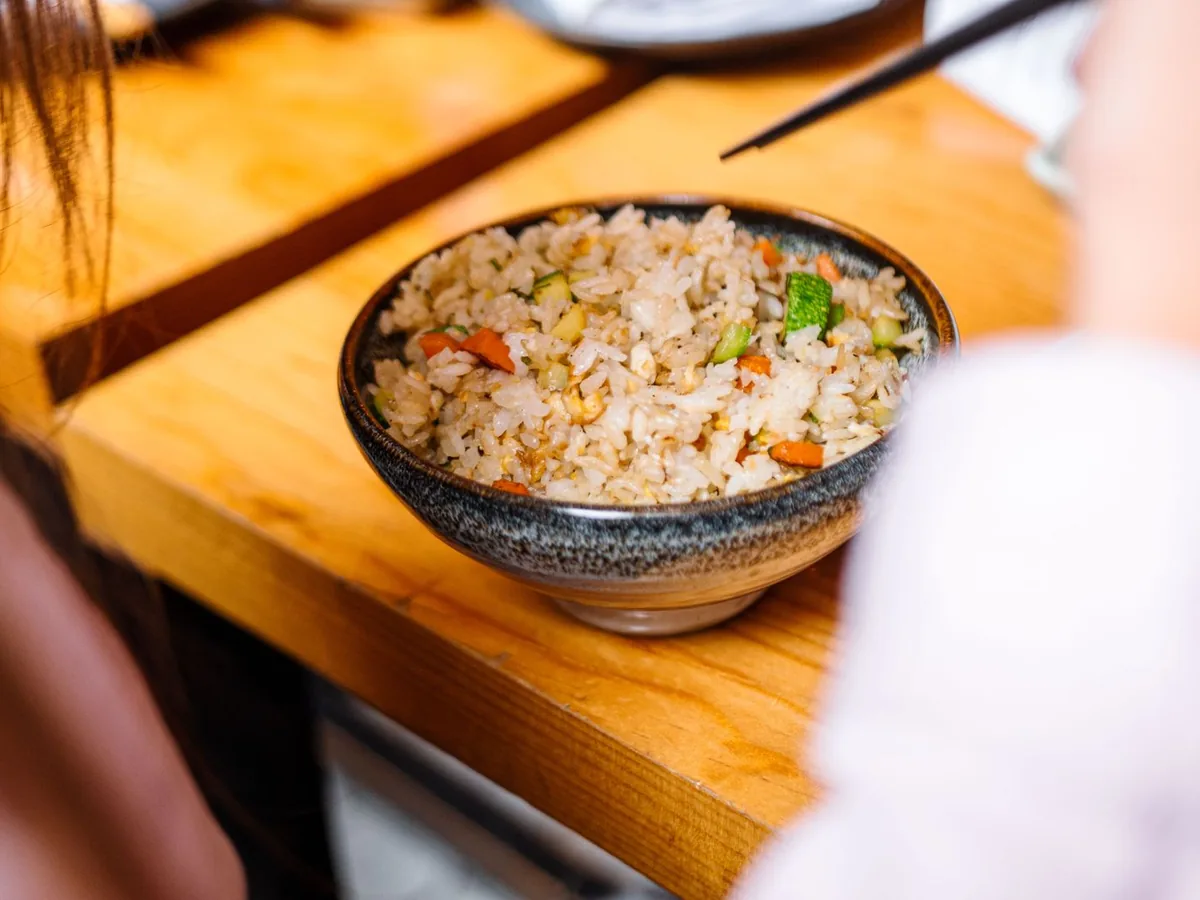
Leftover rice is a gift, and this quick vegetable fried rice is the best way to use it. In 20 minutes, cold rice transforms into something smoky, savory, and studded with crisp-tender vegetables and ribbons of egg — the kind of fried rice that makes you wonder why you ever ordered takeout.
The secret isn’t a special ingredient. It’s technique: a screaming-hot pan, rice that’s had a night in the fridge to dry out, and the discipline to let the rice sit undisturbed so it actually fries instead of steaming. Get those three things right and takeout becomes the backup plan, not the default.
Prep: 10 minutes | Cook: 10 minutes | Total: 20 minutes | Servings: 4
Quick Vegetable Fried Rice
Smoky, savory vegetable fried rice in 20 minutes — day-old rice, crisp vegetables, fluffy egg, and soy sauce caramelized in a screaming-hot pan.
Ingredients
- 4 cups cooked long-grain rice, chilled overnight
- 3 tablespoons neutral oil, divided
- 3 large eggs, beaten with a pinch of salt
- 1 medium onion, diced
- 2 medium carrots, finely diced
- 1 cup frozen peas
- 1 red bell pepper, diced
- 3 cloves garlic, minced
- 3 tablespoons low-sodium soy sauce
- 1 tablespoon oyster sauce (optional)
- 1 teaspoon toasted sesame oil
- 3 green onions, thinly sliced
- 1/2 teaspoon white pepper
Instructions
- Prep everything: Dice all vegetables, beat the eggs, and measure sauces before heating the pan. Break up clumps in the cold rice.
- Scramble the eggs: Heat 1 tablespoon oil in a wok or large skillet over medium-high heat. Scramble the eggs into soft ribbons, about 1 minute; transfer to a plate.
- Sear the vegetables: Add 1 tablespoon oil and raise heat to high. Stir-fry onion and carrots 2 minutes; add bell pepper and peas and stir-fry 2 more minutes.
- Add garlic and rice: Push vegetables aside. Add remaining oil and garlic to the center; cook 30 seconds. Add the cold rice, breaking up clumps.
- Fry the rice: Spread in an even layer and let sit undisturbed 1–2 minutes to crisp; toss and repeat once.
- Season: Drizzle soy sauce and oyster sauce around the hot pan edges so they sizzle, then toss through. Add white pepper.
- Finish: Fold in eggs and green onions. Drizzle sesame oil off the heat; toss once more.
- Serve: Taste for soy sauce and serve immediately with chili crisp or sriracha on the side.
Recipe Notes
Keeps 4 days refrigerated; reheats best in a hot skillet. Freezes up to 2 months. Cook in batches when doubling — never crowd the pan.
Why this recipe works
Day-old rice is non-negotiable for great fried rice. Fresh rice is too moist — it steams and clumps instead of frying. A night in the refrigerator dries out the surface of each grain, so the rice fries up distinct and lightly crisp, with that coveted slightly smoky flavor.
High heat does the rest. A ripping-hot wok or skillet sears the vegetables quickly so they stay crisp, and the soy sauce hits the hot pan directly (not the rice), where it caramelizes for a split second before the rice goes in. That 10-second sizzle is where the deep, savory “wok hei” character comes from. The egg cooks separately into soft ribbons so it stays fluffy instead of disappearing into the rice.
Ingredients
- 4 cups cooked long-grain rice, chilled overnight — day-old rice is the key; spread fresh rice on a tray and refrigerate uncovered for a few hours if you’re in a pinch.
- 3 tablespoons neutral oil (such as avocado or vegetable oil), divided — high smoke point matters here; olive oil will smoke and taste bitter.
- 3 large eggs, beaten with a pinch of salt — cooked into soft ribbons and folded in at the end.
- 1 medium onion, diced — sweetness and body.
- 2 medium carrots, peeled and finely diced — small dice so they cook through quickly.
- 1 cup frozen peas — no need to thaw; they go straight in.
- 1 red bell pepper, diced — color, sweetness, and crunch.
- 3 cloves garlic, minced — added late so it doesn’t burn in the high heat.
- 3 tablespoons low-sodium soy sauce — the savory backbone; low-sodium keeps it balanced.
- 1 tablespoon oyster sauce (optional) — adds a deep, almost meaty savoriness.
- 1 teaspoon toasted sesame oil — nutty finishing aroma; add off the heat so it doesn’t burn.
- 3 green onions, thinly sliced — fresh bite and color at the end.
- 1/2 teaspoon white pepper (or black pepper) — white pepper is the classic fried-rice seasoning.
Substitutions
- Different vegetables: Use whatever you have — corn, edamame, diced zucchini, mushrooms, bean sprouts, or broccoli florets. Keep the total around 3 cups.
- Add protein: Diced cooked chicken, shrimp, or cubed tofu turn this into a complete meal. Cook the protein first, set aside, and add back at the end.
- Tamari or coconut aminos: Both substitute for soy sauce; coconut aminos are slightly sweeter, so use a touch less.
- No oyster sauce: A teaspoon of sugar plus an extra splash of soy sauce approximates the sweet-savory balance.
- Brown rice or cauliflower rice: Both work — brown rice needs the same overnight chill; cauliflower rice should go in straight from frozen and needs less cooking time.
- Spicy: Add diced fresh chilies, a spoonful of chili crisp, or sriracha to taste.
Equipment
A large wok is ideal, but a 12-inch skillet works fine — the key is enough surface area and high heat. Carbon steel or stainless steel handles the heat better than nonstick for this kind of searing. You’ll also need a good knife for the vegetable dice — our guide to choosing the right chef’s knife covers the rocking chop that makes quick work of carrots and peppers — plus a wide spatula for tossing.
Instructions
- Prep everything first. Fried rice moves fast — have all vegetables diced, eggs beaten, and sauces measured before the pan gets hot. Break up any clumps in the cold rice with your fingers or a fork.
- Scramble the eggs. Heat 1 tablespoon of the oil in the wok or skillet over medium-high heat. Add the beaten eggs and scramble into soft ribbons, about 1 minute. Transfer to a plate — they’ll finish cooking later.
- Sear the vegetables. Add another tablespoon of oil and crank the heat to high. Add the onion and carrots; stir-fry 2 minutes. Add the bell pepper and peas; stir-fry 2 more minutes until crisp-tender.
- Add garlic and rice. Push the vegetables to the sides. Add the remaining tablespoon of oil and the garlic to the center; cook 30 seconds. Add the cold rice, breaking up any remaining clumps.
- Fry the rice. Spread the rice in an even layer and let it sit undisturbed for 1–2 minutes so the bottom crisps. Then toss and repeat once more. This is where the texture comes from — don’t rush it.
- Season. Drizzle the soy sauce and oyster sauce around the hot edges of the pan (not directly on the rice) so they sizzle and caramelize, then toss everything together. Add the white pepper.
- Finish. Fold in the scrambled eggs and green onions. Drizzle with the sesame oil off the heat and toss once more.
- Serve. Taste and add more soy sauce if needed. Serve immediately, with chili crisp or sriracha on the side.
Recipe scaling notes
Fried rice does not love being crowded — doubling the batch in one pan steams the rice instead of frying it. For 8 servings, cook in two batches or use your widest pan. The ingredient math is perfectly linear, so our Recipe Scaler handles the quantities; How to Scale Recipes Without Ruining Them explains the batch-cooking workaround in more detail.
Storage and reheating
Refrigerate in an airtight container for up to 4 days. Reheat in a hot skillet with a tiny bit of oil — it crisps back up beautifully, almost like round two of the original. The microwave works too, though you’ll lose the crisp texture.
Freezing
Fried rice freezes surprisingly well for up to 2 months. Cool completely, portion into freezer bags, press flat, and freeze. Reheat straight from frozen in a hot skillet with a splash of water, breaking it up as it thaws. The vegetables stay reasonably crisp — a rare win for frozen rice dishes.
Common mistakes and troubleshooting
- Mushy, clumpy rice: Fresh or warm rice was used. Only cold, day-old rice gives you distinct grains. No leftovers? Spread freshly cooked rice on a sheet pan and refrigerate uncovered for at least 2 hours.
- Soggy instead of fried: The pan wasn’t hot enough, or it was overcrowded. Use high heat, cook in batches, and let the rice sit undisturbed to crisp.
- Bland: Not enough soy sauce, or the sauce went on the rice instead of the hot pan. Season in layers and taste at the end.
- Burnt garlic: Added too early. Garlic burns in seconds at wok heat — it goes in after the vegetables are nearly done.
- Eggs disappeared: They were overcooked into tiny bits or added too early. Cook soft ribbons separately and fold in last.
Frequently asked questions
Do I really need day-old rice? It’s the single biggest factor in good fried rice. Fresh rice has too much surface moisture and turns gummy. The quick fix: spread fresh rice on a tray and refrigerate uncovered for 2+ hours.
What’s the best pan for fried rice? A carbon steel wok over the highest heat you’ve got. A large stainless skillet is the next best thing. Nonstick works but won’t give you the same sear — see our stainless steel vs nonstick breakdown for why.
Can I make this without egg? Yes — just skip it, or add cubed tofu or edamame for protein. The dish is still excellent.
Is fried rice healthy? It can be — this version is loaded with vegetables and uses modest oil. Use brown rice, go easy on the soy sauce, and load up the veg for the lightest version.
Why does restaurant fried rice taste smoky? That’s “wok hei” — the breath of the wok — from extremely high heat and vaporized oil. Home stoves can’t fully replicate it, but a ripping-hot pan, dry rice, and soy sauce hitting hot metal gets you remarkably close.
Can I use freshly cooked rice if I really have no leftovers? You can, with the tray-and-fridge trick above. In a real emergency, spread hot rice on a tray and put it in the freezer for 20–30 minutes. It’s not perfect, but it beats gummy rice.
Nutrition
One serving (about 1 1/2 cups) contains an estimated 380 calories, 11g protein, 62g carbohydrates, and 10g fat. These are estimates only, based on standard ingredient data — actual values vary with your oil amount, soy sauce, and add-ins. This is a general guide, not medical advice.
Takeout, upgraded
Once you nail the technique — cold rice, hot pan, patience — this quick vegetable fried rice becomes a 20-minute solution to the eternal “what’s for dinner” question. Craving noodles instead? Our Easy Vegetable Lo Mein scratches the same itch with a different carb.