
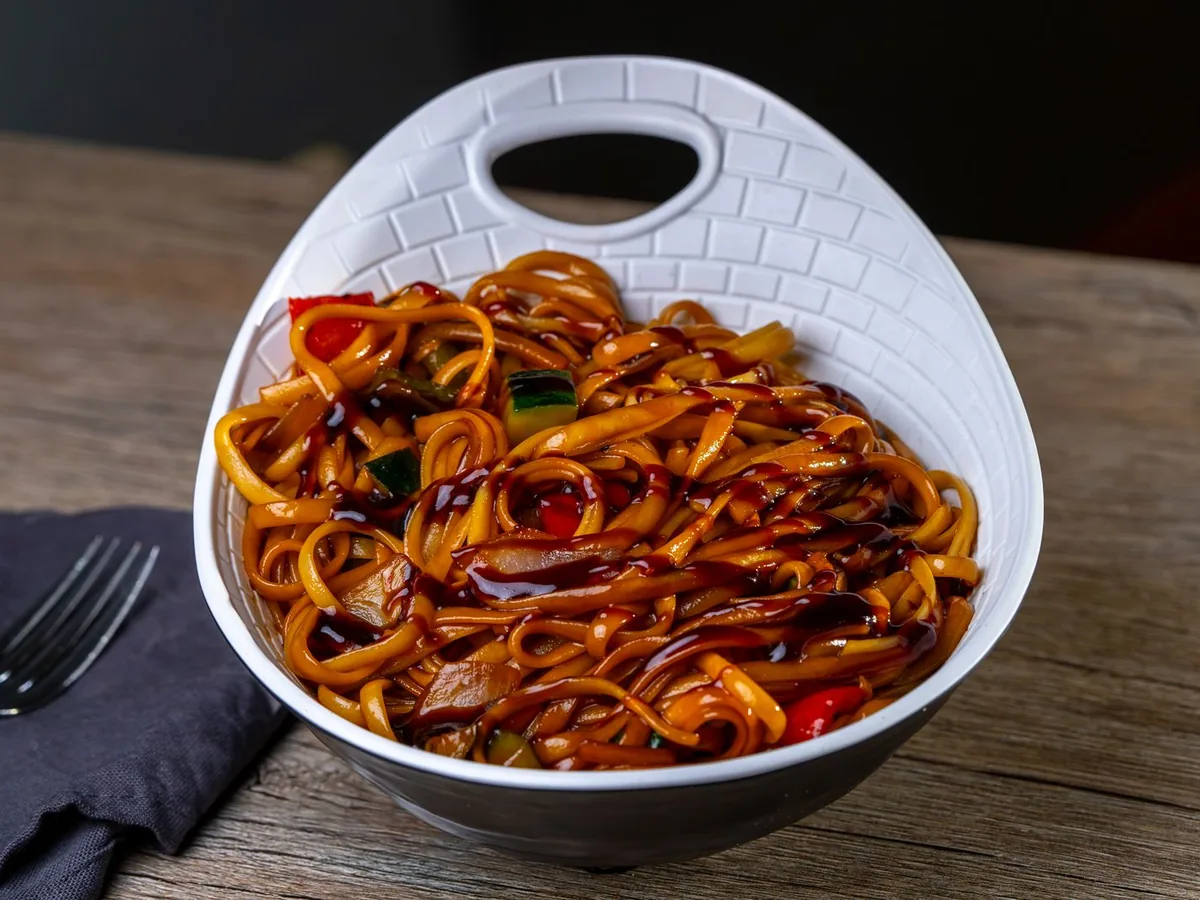
Lo mein is the takeout order everyone loves, and it’s shockingly easy to make at home. This easy vegetable lo mein delivers springy noodles tangled with crisp-tender broccoli, carrots, peppers, and snap peas, all glossed with a savory-sweet soy-sesame sauce. It’s on the table in 25 minutes, tastes fresher than delivery, and you control exactly what goes in.
The whole dish hinges on one principle: everything cooks fast, so everything gets prepped first. Once the wok is hot, you’re about six minutes from dinner.
Prep: 15 minutes | Cook: 10 minutes | Total: 25 minutes | Servings: 4
Easy Vegetable Lo Mein
Easy vegetable lo mein with springy noodles, crisp colorful vegetables, and a savory soy-sesame sauce — a takeout favorite ready in 25 minutes.
Ingredients
- 1/4 cup low-sodium soy sauce
- 2 tablespoons oyster sauce (or hoisin for vegetarian)
- 1 tablespoon toasted sesame oil
- 1 teaspoon sugar
- 1/2 teaspoon grated fresh ginger
- 2 cloves garlic, minced
- 1/4 cup vegetable broth or water
- 12 oz lo mein noodles
- 2 tablespoons neutral oil
- 2 medium carrots, julienned
- 2 cups broccoli florets, cut small
- 1 red bell pepper, thinly sliced
- 1 cup snap peas
- 4 green onions, cut into 2-inch pieces
- 1 tablespoon sesame seeds (optional)
Instructions
- Mix the sauce: Whisk the soy sauce, oyster sauce, sesame oil, sugar, ginger, garlic, and broth in a small bowl; set aside.
- Cook the noodles: Boil the noodles until just tender. Drain, rinse briefly under cold water, and toss with a teaspoon of oil.
- Sear the dense vegetables: Heat the oil in a wok over high heat until shimmering. Stir-fry the carrots and broccoli 2–3 minutes.
- Add the quick vegetables: Add the bell pepper, snap peas, and green onions; stir-fry 2 minutes more until crisp-tender.
- Add noodles and sauce: Add the noodles and pour over the sauce. Toss vigorously 1–2 minutes until heated through and glossed.
- Serve: Transfer to bowls, sprinkle with sesame seeds, and serve immediately.
Recipe Notes
Keeps 4 days refrigerated; reheat in a hot skillet with a splash of water. Not recommended for freezing. Stir-fry vegetables in batches when doubling.
Why this recipe works
Authentic lo mein texture comes from the right noodle cooked the right way. Lo mein noodles (or a good substitute) are wheat noodles with a springy chew — cooked just until tender, then tossed in the hot wok so they absorb the sauce without going soft. Rinsing them in cold water after boiling stops the cooking and washes off surface starch that would make them gummy.
The sauce is a simple balance of savory (soy sauce), sweet (a touch of sugar or hoisin), and aromatic (sesame oil, garlic, ginger). It’s mixed before cooking starts so it hits the wok all at once. And the vegetables go in order of density — carrots and broccoli first, snap peas and peppers last — so everything finishes crisp-tender at the same moment.
Ingredients
For the sauce: – 1/4 cup low-sodium soy sauce — the savory base; low-sodium keeps the balance right. – 2 tablespoons oyster sauce (or hoisin for vegetarian) — deep, glossy savoriness. Note: traditional oyster sauce isn’t vegetarian — use hoisin or a mushroom-based vegetarian oyster sauce if needed. – 1 tablespoon toasted sesame oil — nutty aroma; the signature lo mein flavor. – 1 teaspoon sugar — rounds out the saltiness; you won’t taste it as sweet. – 1/2 teaspoon grated fresh ginger — warm, bright heat. – 2 cloves garlic, minced — aromatic backbone. – 1/4 cup vegetable broth or water — loosens the sauce so it coats instead of clumping.
For the noodles and vegetables: – 12 oz fresh or dried lo mein noodles (or spaghetti as a substitute) — the star; cook just until tender. – 2 tablespoons neutral oil (such as avocado or vegetable oil) — for the high-heat stir-fry. – 2 medium carrots, julienned — thin matchsticks cook quickly and evenly. – 2 cups broccoli florets, cut small — classic lo mein vegetable. – 1 red bell pepper, thinly sliced — sweetness and color. – 1 cup snap peas — crisp, sweet pop. – 4 green onions, cut into 2-inch pieces — fresh onion bite. – 1 tablespoon sesame seeds (optional) — garnish and crunch.
Substitutions
- Noodles: Dried lo mein, fresh lo mein, yakisoba noodles, ramen noodles (discard the seasoning packet), or plain spaghetti all work. Cook according to package directions.
- Vegetables: Use what you have — mushrooms, baby corn, bok choy, zucchini, or bean sprouts. Keep the total around 5–6 cups.
- Gluten-free: Use rice noodles and tamari instead of soy sauce; the sauce works the same.
- Add protein: Sliced chicken, shrimp, beef, or cubed tofu — sear first, set aside, and add back with the noodles. Our Quick Vegetable Fried Rice follows the same protein logic.
- Spicy: Add sliced fresh chilies with the vegetables or drizzle with chili oil at the end.
- No oyster sauce: Use hoisin plus an extra teaspoon of soy sauce.
Equipment
A wok is ideal for the high heat and tossing room, but a 12-inch skillet works — the principles are the same as our Quick Vegetable Fried Rice. Use stainless steel or carbon steel rather than nonstick if you want a real sear. A sharp knife is essential for the julienne cuts — our guide to choosing the right chef’s knife makes vegetable prep faster and safer. You’ll also need tongs and a colander.
Instructions
- Mix the sauce. Whisk together the soy sauce, oyster sauce, sesame oil, sugar, ginger, garlic, and broth in a small bowl. Set aside — the wok waits for no one.
- Cook the noodles. Boil the noodles according to package directions until just tender. Drain, rinse briefly under cold water to stop the cooking, and toss with a teaspoon of oil to prevent sticking.
- Sear the dense vegetables. Heat the oil in a wok or large skillet over high heat until shimmering. Add the carrots and broccoli; stir-fry 2–3 minutes until bright and beginning to soften.
- Add the quick vegetables. Add the bell pepper, snap peas, and green onions. Stir-fry 2 minutes more — everything should be crisp-tender, not soft.
- Add noodles and sauce. Add the noodles to the wok and pour the sauce over everything. Toss vigorously with tongs for 1–2 minutes until the noodles are heated through and every strand is glossed with sauce. The sauce will thicken slightly as it hits the heat.
- Serve. Transfer to bowls, sprinkle with sesame seeds, and serve immediately with extra soy sauce and chili oil on the side.
Recipe scaling notes
Like fried rice, lo mein suffers when the pan is crowded — vegetables steam instead of sear. For 8 servings, stir-fry the vegetables in two batches, then combine everything for the final toss. The sauce math is linear, so our Recipe Scaler handles it; How to Scale Recipes Without Ruining Them explains the batch method in detail.
Storage and reheating
Refrigerate in an airtight container for up to 4 days. Reheat in a hot skillet with a splash of water — the noodles loosen back up beautifully. The microwave works too, though the vegetables lose some crispness. Cold lo mein straight from the fridge, incidentally, is a legitimate pleasure.
Freezing
Not recommended — the noodles turn mushy and the vegetables go limp after thawing. This is a 25-minute recipe; make it fresh. If you need a freezer-friendly noodle night, our Creamy Tomato Pasta sauce freezes far better.
Common mistakes and troubleshooting
- Gummy noodles: Overcooked, or not rinsed after boiling. Cook just until tender, rinse in cold water, and toss with a little oil.
- Soggy vegetables: Pan wasn’t hot enough or was overcrowded. High heat, batches, and constant motion.
- Bland sauce: Under-seasoned, or the sauce didn’t reduce. Taste before serving — it should be bold, since noodles mute flavor.
- Sauce pools at the bottom: Too much liquid or not enough tossing. The broth amount is calibrated; toss until the sauce clings.
- Everything overcooked: The prep wasn’t done before the heat went on. Mise en place isn’t fussy here — it’s mandatory.
Frequently asked questions
What’s the difference between lo mein and chow mein? Lo mein noodles are boiled then tossed with sauce; chow mein noodles are stir-fried until slightly crisp. Lo mein is soft and saucy; chow mein has crispy bits.
Can I use spaghetti instead of lo mein noodles? Yes — it’s the most accessible substitute and works surprisingly well. Cook it just until tender and rinse it. The chew is slightly different but the dish is still delicious.
Is lo mein vegetarian? As written here, yes — except traditional oyster sauce, which contains oyster extract. Use hoisin or vegetarian mushroom oyster sauce to keep it fully vegetarian.
How do I keep the vegetables crisp? Screaming-hot pan, small batches, and short cooking times. Vegetables should look bright and still have bite — if they’re dull and soft, they’ve gone too far.
Can I add chicken or shrimp? Absolutely. Sear bite-sized pieces first, set aside, and toss back in with the noodles. About 1 lb of protein for this recipe’s 4 servings.
Why rinse the noodles in cold water? It stops the cooking instantly and washes away surface starch, so the noodles stay springy and separate instead of clumping into a gummy mass.
Nutrition
One serving (about 1 1/2 cups) contains an estimated 420 calories, 13g protein, 72g carbohydrates, and 10g fat. These are estimates only, based on standard ingredient data — actual values vary with your noodle brand, oil amount, and vegetable mix. This is a general guide, not medical advice.
Takeout night, at home
This easy vegetable lo mein proves that the best takeout is the kind you make yourself: fresher vegetables, springier noodles, and dinner in 25 minutes flat. For another fast Asian-inspired favorite, our Quick Vegetable Fried Rice is the perfect companion recipe.