
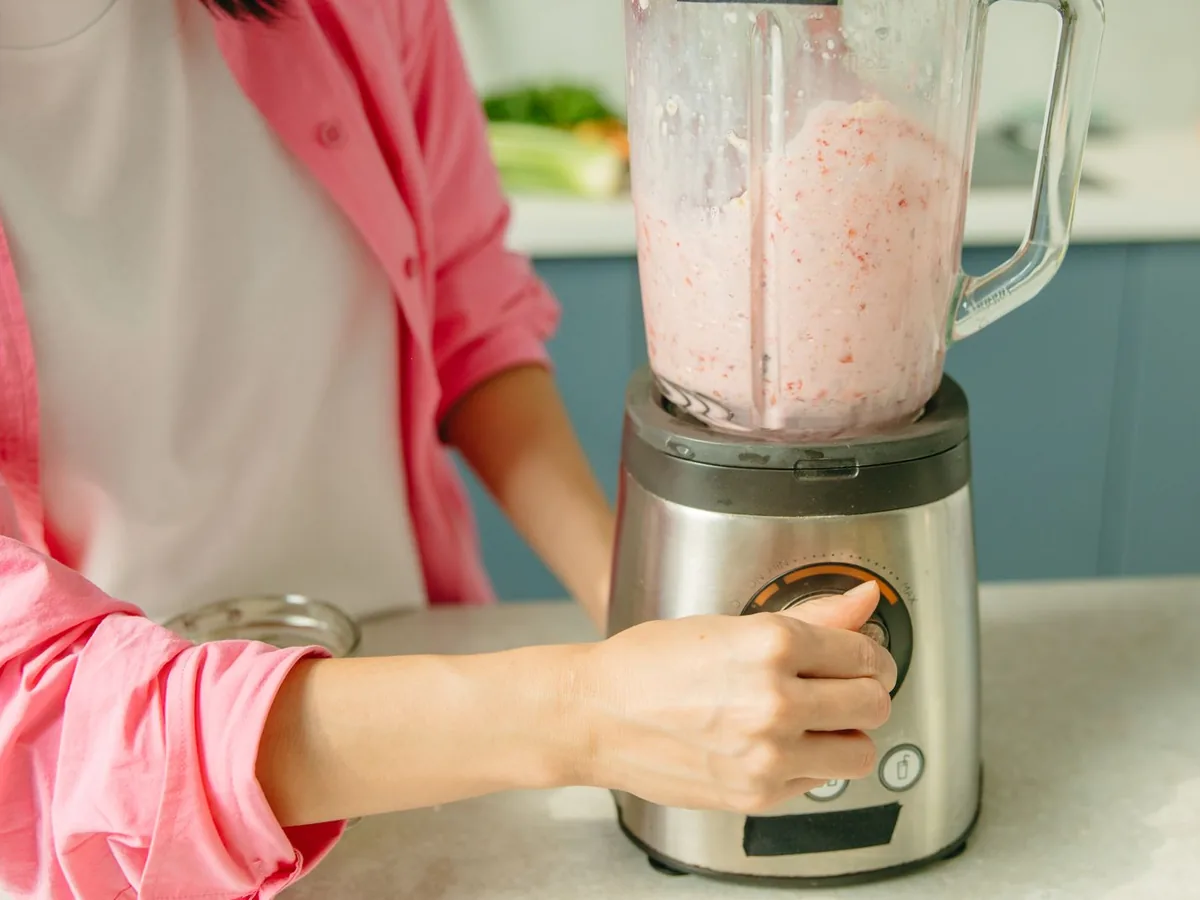
Few appliances earn their counter space like a good blender. Morning smoothies, silky soups, homemade nut butter, crushed ice for summer drinks, pancake batter in seconds — a blender that suits your cooking style gets used almost daily. The wrong one, though, ends up shoved in a cabinet, rattling violently every time you ask it to crush three ice cubes.
Blenders range from compact personal models to heavy-duty machines with the power of a small engine, and the price spread is just as wide. The trick isn’t finding “the best blender” in some absolute sense — it’s finding the best blender for what you’ll actually make. This guide breaks down the types, the features that matter, and the ones you can ignore.
Start With What You’ll Blend
Before comparing a single spec, answer this: what will go into the jar most days? Your answer determines nearly everything.
- Mostly smoothies and shakes (soft fruit, greens, yogurt, protein powder): you don’t need massive power. A mid-range countertop or even a personal blender handles this happily.
- Frozen fruit, ice, and thick blends: you need more muscle and sturdy blades. Underpowered motors overheat, and weak jars can crack under the stress.
- Soups, sauces, and hot liquids: look for a jar rated for hot ingredients and a lid that vents steam safely. An immersion blender is also worth considering for this job.
- Nut butters, hummus, and thick dips: these demand sustained power and a tamper or a design that pulls thick mixtures down into the blades. This is high-performance territory.
- Baby food and small batches: a personal blender or a compact model with small jars is more practical than a giant pitcher you’ll barely fill.
Be honest about the 80% use case, not the fantasy one. The blender you’ll use every morning for a berry smoothie doesn’t need to pulverize a bag of ice — but if frozen drinks are a weekly ritual, buy for that.
The Four Types of Blenders
| Type | Best for | Strengths | Drawbacks |
|---|---|---|---|
| Full-size countertop | Families; daily smoothies; soups; general use | Large capacity (typically 48–64 oz); versatile; good power for the price | Takes counter space; overkill for single servings; louder |
| Personal / single-serve | Solo smoothies; protein shakes; small kitchens | Compact; blends directly into a travel cup; easy to clean; affordable | Small capacity; weaker motors; struggles with ice and frozen fruit |
| High-performance | Nut butters; frozen desserts; ice; serious daily use | Very powerful motors; durable; handles the toughest jobs; often self-cleaning | Expensive; large; loud |
| Immersion (stick) blender | Soups in the pot; sauces; small batches; baby food | Tiny storage footprint; blends right in the cooking vessel; easy cleanup | Not for ice or frozen fruit; smaller volumes; less smooth results for thick blends |
A note on immersion blenders: they’re technically blenders, and for soups and sauces they’re arguably better than a countertop model — no transferring hot liquid, less to wash. But they can’t replace a jar blender for smoothies, frozen drinks, or anything needing real vortex power. Many keen cooks eventually own both.
Key Features, Explained Without the Jargon
Motor power
You’ll see wattage advertised prominently, and it does matter — but it’s not the whole story. In general terms: basic personal blenders sit at the low end, standard countertop models in the middle, and high-performance machines at the top. More power generally means better handling of ice, frozen fruit, and thick mixtures without straining. But blade design, jar shape, and build quality matter just as much; a well-designed mid-power blender often outperforms a cheap high-wattage one. Treat wattage as a rough indicator, not a verdict.
Jar capacity and material
Match the jar to your household. A big family making smoothies for four needs a large pitcher; a single person mostly making one shake at a time will find a huge jar annoying — ingredients get stranded above the blades. As for material: heavy glass jars feel premium and don’t absorb odors, but they’re heavy and can break; quality BPA-free plastic (like Tritan) is lighter, very durable, and the standard on most good blenders today.
Blade design and jar shape
This is underrated. Blades that create a strong vortex — pulling ingredients down and around — blend more evenly with less stopping and stirring. A jar that’s too wide at the base with a weak vortex leaves chunks hiding in the corners. If you can, look at the jar shape: a slightly tapered design that funnels food toward the blades tends to perform better than a straight-sided tub.
Speeds and programs
You need less than you think. A low speed, a high speed, and a pulse function cover nearly everything. Preset programs (smoothie, ice crush, soup) are convenient but not essential — they’re just timed speed sequences you can replicate manually. Variable speed control is genuinely useful for dialing in textures, from chunky salsa to silk-smooth purée.
Ease of cleaning
You’ll clean your blender far more often than you’ll admire its specs, so this matters enormously. Dishwasher-safe jars and blades save real time. Some high-performance models offer a self-cleaning cycle (water plus a drop of soap, run on high, rinse). If hand-washing, look for a blade assembly that comes apart or a jar shape without tight crevices where gunk hides.
Noise
Blenders are loud — it’s the nature of a fast motor in a hard jar. High-performance models are the loudest. If you blend at 6 a.m. with sleeping housemates, noise-reducing designs or a quieter mid-range model might be worth prioritizing. There is no silent blender, only less loud ones.
Size and storage
Measure your counter space — including clearance under cabinets, since many full-size blenders are too tall to fit beneath standard uppers with the lid on. If counter space is precious, a personal blender that lives in a cabinet and comes out in seconds may serve you better than a countertop model you resent.
Pros and Cons by Type
Full-size countertop: the versatile all-rounder. Handles most jobs well, reasonably priced, but bulky and louder than personal models.
Personal/single-serve: unbeatable convenience for one person — blend and go, minimal cleanup. Limited power and capacity mean it’s a specialist, not a generalist.
High-performance: the “buy it once” option for heavy use. Powers through anything, built to last, but expensive, large, and loud.
Immersion: the soup-and-sauce specialist. Tiny, cheap, and brilliant at its job — but not a substitute for a jar blender.
Use Cases: Matching Blender to Kitchen
- The daily smoothie drinker: a personal blender if it’s just you; a solid mid-range countertop model if you’re blending for the household. Check out our healthy smoothie recipes to put it to work immediately.
- The soup and sauce cook: an immersion blender for in-pot blending, or a countertop model with a heat-safe jar. (Never fill a standard blender jar more than half with hot liquid, and always vent the lid.)
- The frozen-treat enthusiast: you need real power — look toward the upper end of countertop models or high-performance machines.
- The meal-prepper: a full-size model with a large jar handles big batches of sauces, dressings, and purées efficiently.
- The small kitchen: a personal blender plus an immersion blender covers most needs in minimal space.
Still torn between a blender and its closest rival? Our food processor vs. blender breakdown will help you decide which one — or whether you need both.
Care and Maintenance
- Clean immediately after use. Dried smoothie cement is nobody’s friend. A quick rinse right away, then a proper wash, keeps everything effortless.
- The soap-and-spin method: fill the jar halfway with warm water, add a drop of dish soap, run on high for 30–60 seconds, then rinse. Works for most daily cleaning.
- Deep clean periodically: disassemble the blade (if your model allows), scrub the gasket and under the blades where residue hides, and check for odors — a blend of water, baking soda, and lemon freshens a funky jar.
- Don’t overload the motor. If the blender strains, smells hot, or the contents stop moving, stop, stir or add liquid, and continue. Running a struggling motor burns it out early.
- Check the blade assembly and gasket now and then. A worn gasket leaks; a loose blade assembly rattles and blends poorly.
Safety Considerations
- Hot liquids need respect. Never fill more than halfway, remove the center cap from the lid (or vent it), and hold a folded towel over the lid while blending. Steam expands fast and can blow the lid off.
- Keep hands and utensils out of a running blender. Use the tamper that came with it — that’s what it’s for. If you must stir, unplug or switch off first.
- Unplug before cleaning around the blades. Blades are sharp enough to cut during a casual wipe.
- Let the motor rest between heavy batches rather than running it continuously for many minutes.
- Check that the jar is seated properly before starting — a misaligned jar leaks or, worse, launches.
Common Mistakes to Avoid
- Buying for fantasy use. The ultra-powerful machine for nut butter you’ll make twice a year, when a mid-range model would nail your actual daily smoothies.
- Putting liquids in last. Liquid goes in first, then soft ingredients, then frozen items and ice on top. This order lets the blades catch and create the vortex; reversed, the motor just spins air.
- Overfilling the jar. Past the max line, contents can’t circulate — you get unblended chunks on top and strain on the bottom.
- Running too long on thick blends. If nothing’s moving, more time won’t fix it — stop, stir, add liquid, and restart.
- Ignoring the seal. A missing or worn gasket means leaks down the base and eventually into the motor housing.
Frequently Asked Questions
How much power do I really need for smoothies?
For basic smoothies with fresh fruit, yogurt, and greens, a standard mid-range blender is plenty. Frozen fruit and ice are what separate the capable from the struggling — if those are regulars in your recipes, step up in power.
Can a blender replace a food processor?
Partially. Blenders excel at liquids and smooth textures; food processors handle dry chopping, slicing, grating, and dough far better. For details, see our food processor vs. blender comparison.
Are expensive blenders worth it?
If you blend daily, crush ice regularly, or make nut butters and frozen desserts, a high-performance model’s power and durability pay off over years of heavy use. For occasional smoothies, a good mid-range model is the smarter buy.
Glass or plastic jar?
Quality BPA-free plastic is lighter, won’t shatter, and is standard on most well-regarded blenders. Glass feels substantial and resists odors and staining, but it’s heavy and breakable. Either works — prioritize jar shape and blade design over material.
Why does my smoothie have chunks even after blending for ages?
Usually the loading order (liquids first), overfilling, or too little liquid for the amount of frozen ingredients. Add liquid a splash at a time until the vortex forms and everything circulates.
How long should a blender last?
A decent countertop blender used normally should last several years; high-performance models are often built for a decade or more of regular use. The motor usually outlives the jar, gasket, and blade assembly — all replaceable on better models.
The Bottom Line
Match the blender to your real routine: personal for solo smoothie drinkers, mid-range countertop for most households, high-performance for heavy-duty frozen and thick blending, and an immersion blender for soups and sauces. Prioritize jar shape and blade design alongside power, insist on easy cleaning, and load liquids first. Get those decisions right and your blender becomes the hardest-working appliance you own — starting with a round of healthy smoothies.