
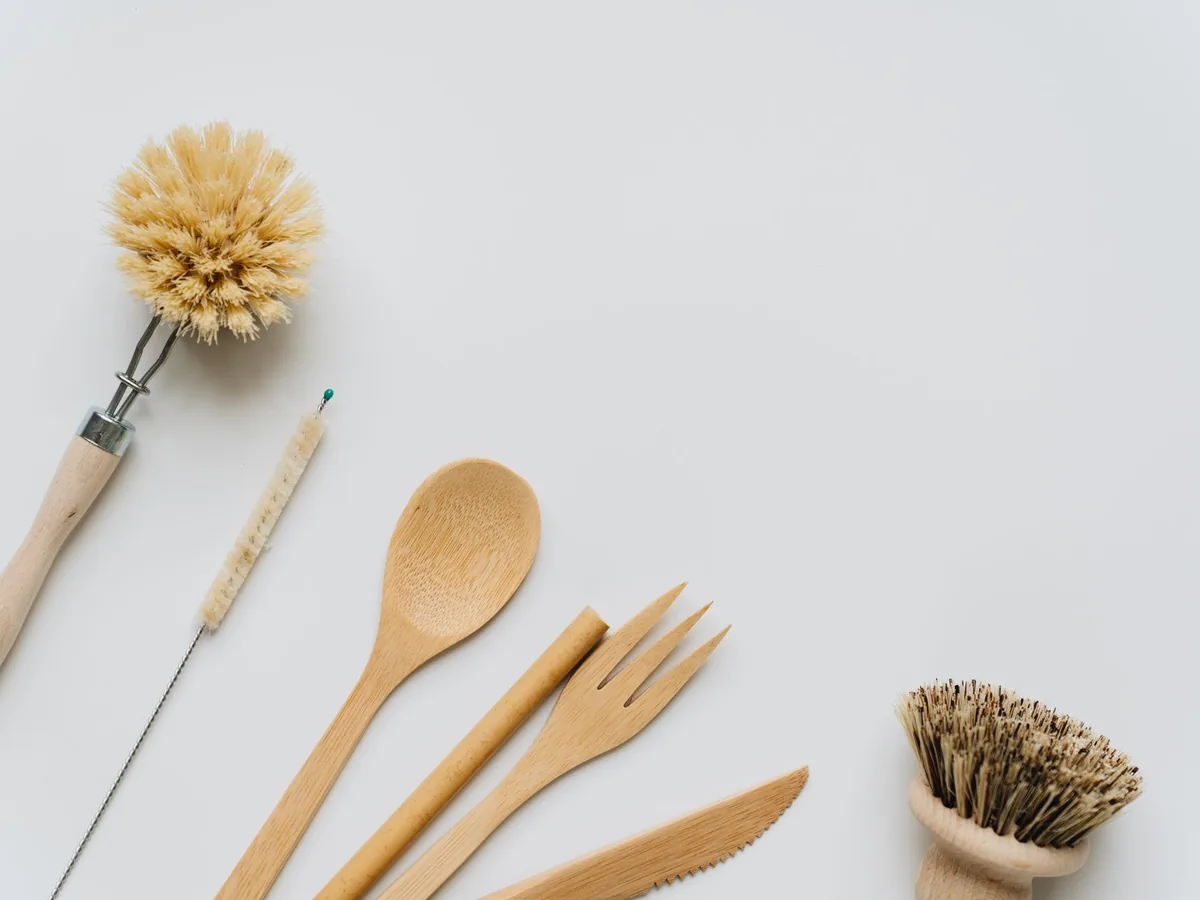
Here’s a secret the kitchenware industry doesn’t want you to know: you need far less equipment than you think. New cooks routinely buy 15-piece knife sets, single-use gadgets, and matching cookware collections — then use about six things daily while the rest colonize cabinet space.
This guide gives you the honest starter list: the tools that genuinely earn their place, in the order you should buy them. No filler, no gimmicks — just the equipment that takes you from nervous beginner to confident home cook.
The Philosophy: Buy Few, Buy Well, Add Slowly
Resist the starter-set trap. A cheap 20-piece cookware set or knife block looks like value, but you’ll use two pans and one knife while the rest dulls in a drawer. A better strategy:
- Start with the true essentials (the list below).
- Buy the best you can comfortably afford in the pieces you’ll use daily — a good knife and one good pan transform your cooking more than ten mediocre gadgets.
- Add tools as your cooking demands them. Making bread? Then buy a bench scraper. Until then, skip it.
Your kitchen should grow with your skills, not ahead of them.
The Essentials, in Buying Order
1. A chef’s knife (8-inch)
The single most important tool in your kitchen. You’ll use it for nearly every meal — chopping, slicing, dicing, mincing. One good 8-inch chef’s knife outperforms an entire block of cheap knives. Read our full guide on how to choose the right chef’s knife before you buy; comfort and balance matter more than brand or looks.
2. A cutting board (large)
Big enough that food isn’t falling off the edges — at least 12 by 18 inches if your counter allows. Wood is kind to knife edges and pleasant to work on; sturdy plastic is affordable, lightweight, and dishwasher-safe. Our guide to choosing the right cutting board walks through wood versus plastic, sizes, and care.
3. A large skillet (10–12 inch)
Your everyday pan for searing, sautéing, and pan-frying. Stainless steel is the versatile long-term pick; nonstick is more forgiving while you’re learning. Many beginners start with nonstick and add stainless later — our stainless steel vs. nonstick comparison will help you decide which to buy first.
4. A medium saucepan (2–3 quart)
For rice, sauces, soups, boiling eggs, and reheating. A heavy bottom prevents scorching, and a lid is non-negotiable.
5. A rimmed sheet pan (half-sheet size)
Roasting vegetables, baking cookies, toasting nuts, catching drips — the sheet pan is the hardest-working piece of bakeware you can own. Buy two if you roast often; they’re inexpensive.
6. Measuring cups and spoons
Baking especially demands accuracy, and even savory cooking goes smoother when you can measure quickly. A set of dry measuring cups, a liquid measuring cup, and a set of measuring spoons covers everything. If you want to level up your precision (and your baking), learn how to use a kitchen scale — weighing ingredients is faster and more accurate than scooping.
7. Mixing bowls (a nested set of 3)
For mixing, marinating, holding prepped ingredients, and serving. Stainless steel bowls are light, durable, and cheap; glass lets you see what’s happening.
8. Tongs
An extension of your hand for flipping, turning, and serving. Look for 9- or 12-inch tongs with a comfortable spring and silicone or metal tips depending on your cookware.
9. A wooden spoon and a flexible spatula
The wooden spoon stirs, tastes, and scrapes without scratching; the flexible silicone spatula folds batter, scrapes bowls clean, and handles eggs gently. Between them, you’re covered for most stirring and flipping.
10. A vegetable peeler
Faster and safer than a knife for peeling carrots, potatoes, and cucumbers. A simple Y-shaped or straight peeler costs little and lasts years.
11. A colander or strainer
For draining pasta, rinsing produce, and washing grains. A medium stainless colander handles nearly everything.
12. An instant-read thermometer
The difference between guessing and knowing. It takes the anxiety out of chicken, pork, and thick steaks — no more cutting meat open to check. This inexpensive tool might be the biggest confidence-builder on the list.
Quick-Reference Table
| Priority | Tool | What it does for you | Budget tip |
|---|---|---|---|
| 1 | 8″ chef’s knife | 90% of all cutting tasks | One good knife beats a cheap set |
| 2 | Large cutting board | Safe, comfortable prep surface | Plastic is fine to start |
| 3 | 10–12″ skillet | Searing, sautéing, frying | Choose nonstick or stainless first |
| 4 | 2–3 qt saucepan | Rice, sauces, soups, boiling | Heavy bottom, tight lid |
| 5 | Half-sheet pan | Roasting, baking, catching drips | Inexpensive — buy two |
| 6 | Measuring cups & spoons | Accurate baking and cooking | Add a kitchen scale later |
| 7 | Nested mixing bowls | Mixing, marinating, mise en place | Stainless is light and cheap |
| 8 | Tongs | Flipping and serving | 12″ for the stovetop |
| 9 | Wooden spoon + spatula | Stirring, folding, scraping | Silicone spatula is endlessly useful |
| 10 | Vegetable peeler | Fast, safe peeling | Simple Y-peeler lasts years |
| 11 | Colander | Draining pasta, rinsing produce | Medium stainless covers most jobs |
| 12 | Instant-read thermometer | Perfect doneness, no guessing | The best confidence-builder per dollar |
What to Skip (for Now)
- Single-use gadgets — avocado slicers, banana hangers, garlic presses (a knife does the job). If a tool does one thing your knife already does, skip it.
- A full knife set. You need a chef’s knife now; add a paring knife and a serrated bread knife later, individually, when you feel their absence.
- Specialty bakeware — springform pans, madeleine trays, donut molds. Buy for the recipe, not the fantasy.
- An expensive cookware set. Two good pans you chose deliberately beat ten mediocre ones in a box.
- Unitasker appliances until you know your habits. An air fryer is genuinely useful for many cooks — but buy it because you’ll use it weekly, not because it’s trending.
Care Basics That Protect Your Investment
Good tools last decades if you treat them right:
- Knives: hand wash and dry immediately, hone often, store off the blade (magnetic strip or sheaths).
- Measuring tools: keep cups and spoons together where you’ll grab them; if you’re unsure which does what, our explainer on measuring cups vs. spoons clears it up in two minutes.
- Pans: match the utensil to the surface (no metal on nonstick), avoid thermal shock, and clean while still warm when you can.
- Boards: hand wash wooden boards and oil them occasionally; plastic boards can usually go in the dishwasher.
- Everything: dry thoroughly before storing to prevent rust and odors.
Safety Habits From Day One
- Keep knives sharp — dull blades slip and cause the worst cuts.
- Use a damp towel under your cutting board so it can’t slide.
- Turn pot handles inward on the stove so they can’t be knocked.
- Never leave cooking unattended, and keep towels away from burners.
- Let pans cool before washing to avoid warping and steam burns.
Common Beginner Mistakes
- Buying the set. The block set, the cookware set, the gadget set — sets optimize for shelf appeal, not your cooking.
- Buying too much, too fast. A crowded kitchen with tools you don’t understand is worse than a sparse one you know well.
- Neglecting the knife. A dull $150 knife cuts worse than a sharp $40 one. Learn to hone.
- Wrong tool for the pan. Metal utensils in nonstick, or a delicate fish spatula trying to sear a steak — match the tool to the job.
- Storing knives loose in a drawer. Dangerous for fingers, terrible for edges.
Frequently Asked Questions
What’s the absolute minimum I need to start cooking?
A chef’s knife, a cutting board, one skillet, one saucepan, a spatula, and measuring cups. With those six things you can cook the vast majority of everyday meals.
Should I buy a knife set or individual knives?
Individual, always. Buy the chef’s knife first, use it for a month, then add a paring knife if you find yourself wanting one. You’ll end up with three knives you love instead of twelve you tolerate.
How much should a beginner spend on kitchen tools?
Spend more on the daily drivers (knife, skillet) and less on everything else. A solid starter kitchen doesn’t require a fortune — it requires choosing a few good pieces instead of many cheap ones.
Is nonstick or stainless better for a beginner?
Nonstick is more forgiving on day one — eggs and fish release easily while you’re building technique. Stainless rewards you more as skills grow and lasts far longer. Many beginners start with one nonstick skillet and add stainless later.
Do I need a kitchen scale?
Not on day one, but it’s one of the best early upgrades — especially for baking, where weighing flour beats scooping it. Our guide on how to use a kitchen scale shows how quickly it pays off.
When should I replace beginner tools?
Replace nonstick pans when the coating wears (food starts sticking), knives never if you maintain them (they can be sharpened indefinitely), and wooden boards when they’re deeply grooved or warped. Buy-once tools like tongs, peelers, and sheet pans last years.
The Bottom Line
Start with the twelve essentials above, bought in order, chosen deliberately. Learn your chef’s knife and your cutting board first — they’re the foundation everything else builds on. Add a kitchen scale when baking gets serious, consider an air fryer when weeknight speed matters, and let the rest of your kitchen assemble itself around the food you actually cook. The best-equipped kitchen isn’t the fullest one — it’s the one where every tool earns its drawer space.